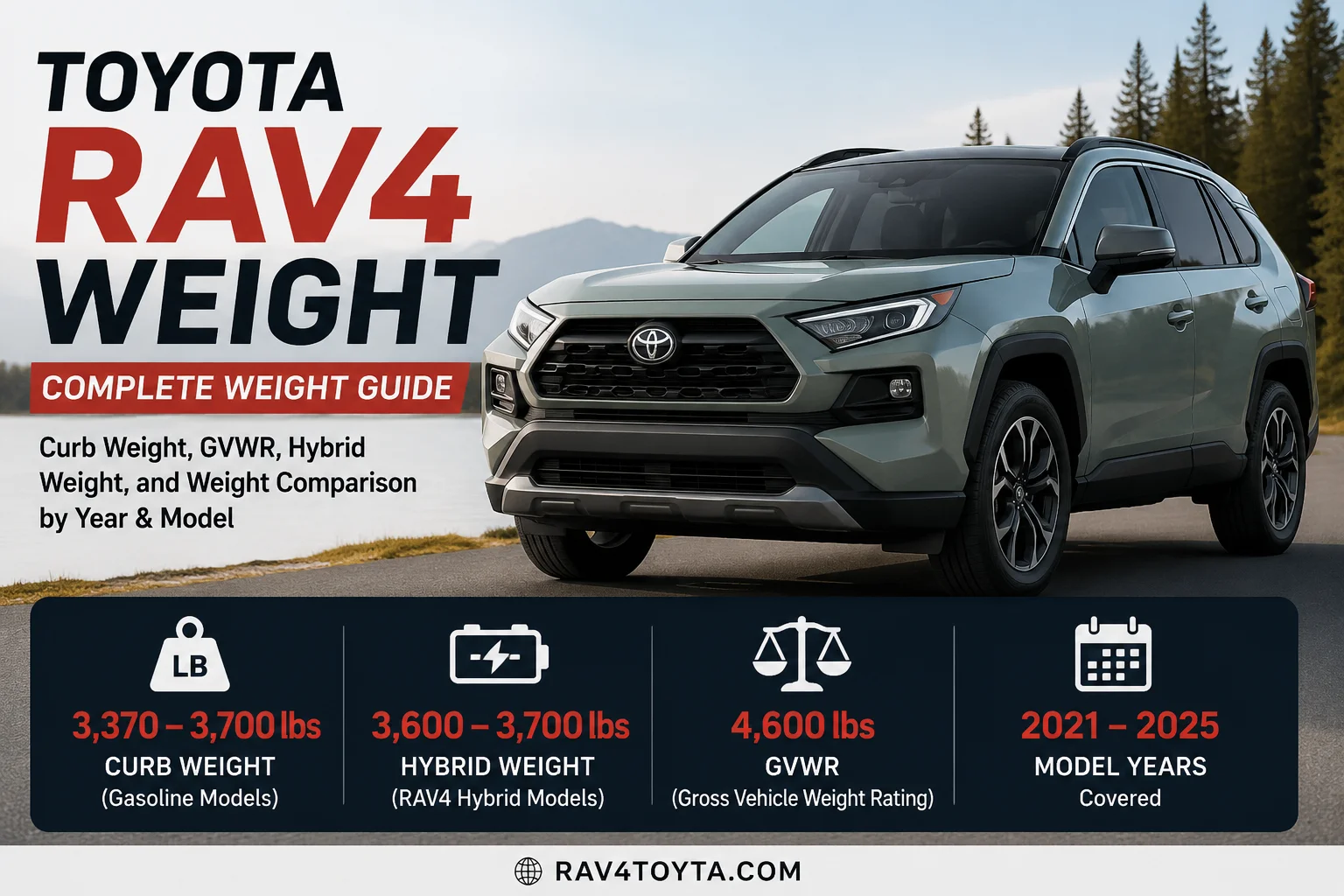
The Toyota RAV4 Weight is an important specification that helps buyers understand vehicle performance, fuel efficiency, handling, and towing capability. The weight of a RAV4 can vary depending on the model year, trim level, engine type, and whether it is a hybrid version.
Toyota RAV4 is known as a practical compact SUV that offers a good balance between comfort, efficiency, and capability. Knowing its curb weight and gross vehicle weight rating (GVWR) helps owners better understand how the vehicle performs on daily drives and long trips.
In this guide, we will explain Toyota RAV4 weight details, including curb weight, GVWR, hybrid model differences, and factors that affect the overall weight of this popular SUV.
Toyota RAV4 Weight by Year
| Model Year | Curb Weight |
|---|---|
| 2025 Toyota RAV4 | 3,370 – 3,635 lbs |
| 2024 Toyota RAV4 | 3,370 – 3,635 lbs |
| 2023 Toyota RAV4 | 3,370 – 3,635 lbs |
| 2022 Toyota RAV4 | 3,370 – 3,635 lbs |
| 2021 Toyota RAV4 | 3,370 – 3,635 lbs |
The Toyota RAV4 weight can vary depending on the trim level, drivetrain, and available features. Most recent RAV4 models have a curb weight between 3,370 and 3,635 pounds. Hybrid models are slightly heavier because they include additional battery components and electric motors.
Toyota RAV4 Curb Weight
Curb weight refers to the total weight of a vehicle with standard equipment and all necessary fluids but without passengers or extra cargo. The Toyota RAV4 curb weight depends on the model year, trim, and powertrain option.
Most gasoline-powered RAV4 models are lighter compared to hybrid versions. A lower curb weight can help improve fuel efficiency, while heavier models may provide better stability and a smoother driving experience.
Toyota RAV4 GVWR
GVWR (Gross Vehicle Weight Rating) is the maximum weight a Toyota RAV4 can safely carry, including passengers, cargo, and fuel. It is different from curb weight because curb weight only refers to the vehicle’s weight without passengers and additional load.
The Toyota RAV4 GVWR depends on the model year and trim level. Most recent RAV4 models have a GVWR around 4,600 pounds, which allows the SUV to handle passengers and cargo while maintaining safe driving performance.
Understanding GVWR is important because exceeding this limit can affect braking, handling, tire performance, and overall vehicle safety. Owners should always check the vehicle information label before carrying heavy loads.
Toyota RAV4 Hybrid Weight
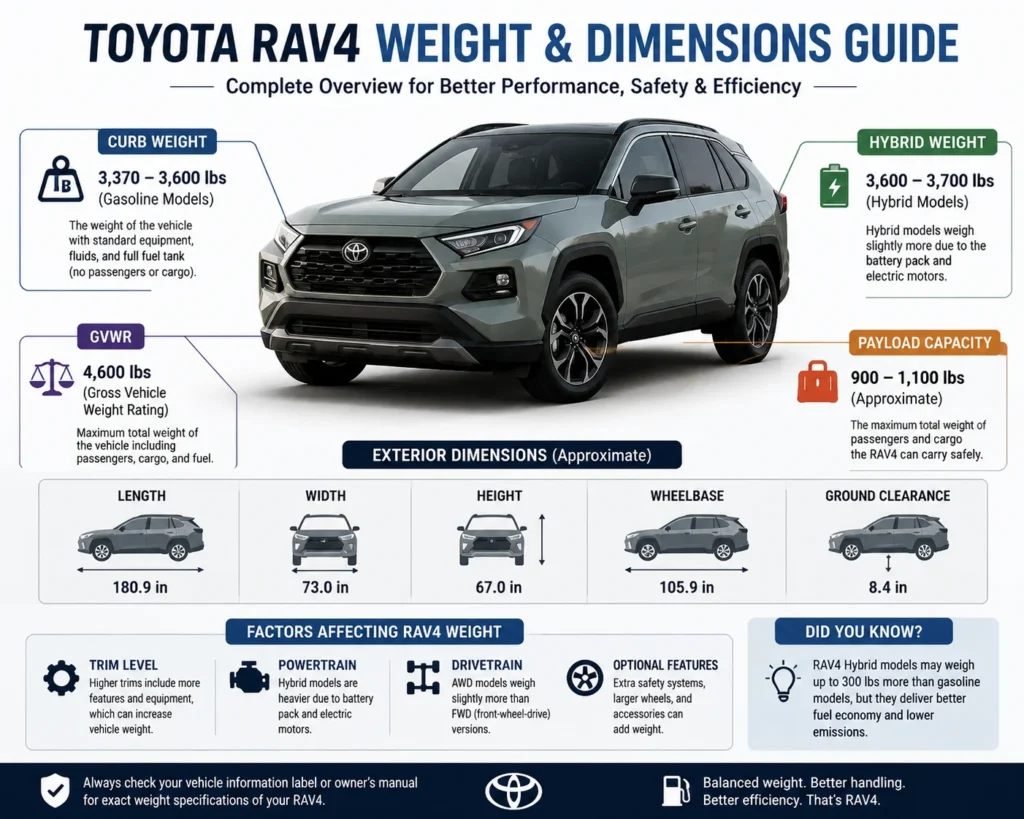
The Toyota RAV4 Hybrid weight is slightly higher than the gasoline model because it uses additional components such as an electric motor and hybrid battery pack. These extra parts add some weight but also improve fuel efficiency and driving performance.
Most Toyota RAV4 Hybrid models have a curb weight between 3,600 and 3,700 pounds, depending on the trim level and available features. Despite the added weight, the hybrid system provides excellent fuel economy and smooth acceleration.
The weight difference between gasoline and hybrid models is usually small, but it can affect handling, efficiency, and overall vehicle dynamics. Buyers should consider both performance and fuel savings when choosing between RAV4 powertrain options.
Toyota RAV4 Weight Comparison
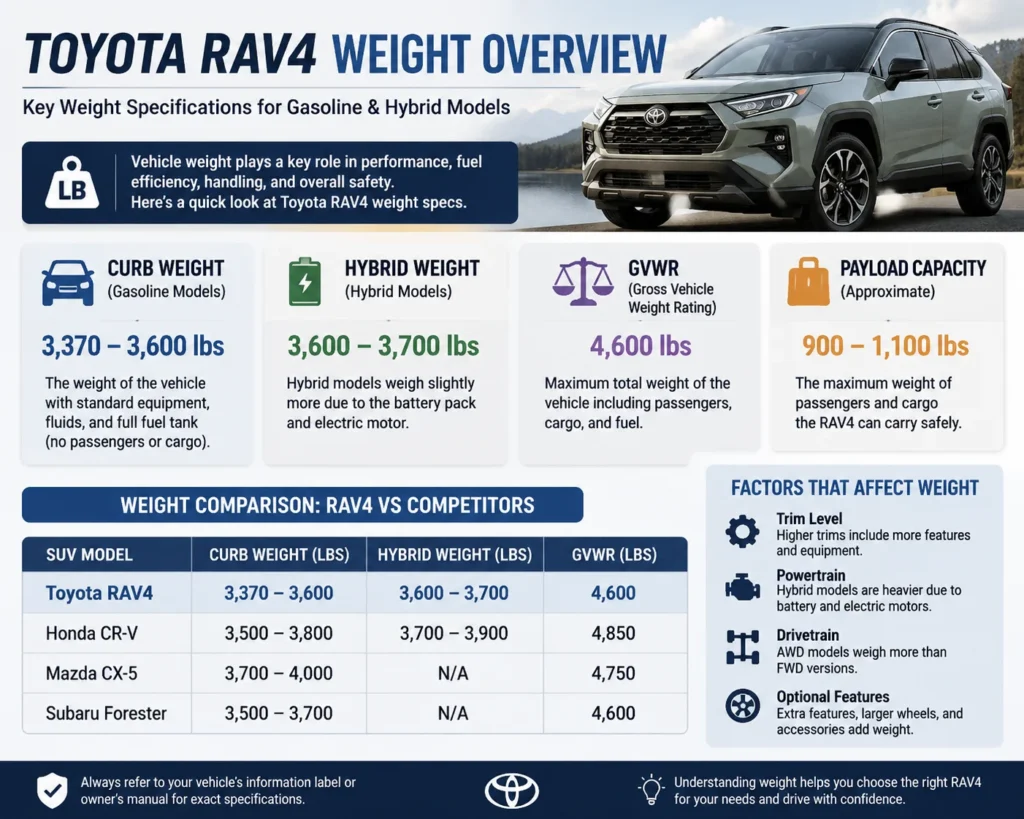
The Toyota RAV4 weight is similar to many compact SUVs in its class. Its balanced weight helps provide a comfortable ride, good fuel efficiency, and stable handling on different road conditions.
| SUV Model | Approximate Curb Weight |
|---|---|
| Toyota RAV4 | 3,370 – 3,700 lbs |
| Honda CR-V | 3,500 – 3,800 lbs |
| Mazda CX-5 | 3,700 – 4,000 lbs |
| Subaru Forester | 3,500 – 3,700 lbs |
When comparing compact SUVs, the vehicle weight is only one factor to consider. The Toyota RAV4 offers a good balance between weight, fuel efficiency, cargo space, and driving stability. Engine performance, safety features, and comfort should also be considered when choosing the right SUV.
Factors Affecting Weight
The Toyota RAV4 weight can change depending on several factors, including the trim level, engine type, drivetrain, and optional features. Different configurations add or reduce weight, which can affect performance and efficiency.
Common factors that influence RAV4 weight include:
- Trim Level: Higher trims often include more features and equipment, which can increase vehicle weight.
- Powertrain: Hybrid models are usually heavier because of the battery pack and electric motors.
- Drivetrain: All-wheel-drive (AWD) models may weigh slightly more than front-wheel-drive versions.
- Optional Features: Extra safety systems, larger wheels, and additional accessories can add weight.
Understanding these factors helps buyers choose a Toyota RAV4 model that matches their driving needs.
How Much Does a Toyota RAV4 Weigh?
The weight of a Toyota RAV4 depends on the model year, trim level, and powertrain option. Most modern RAV4 models have a curb weight between 3,370 and 3,700 pounds.
Gasoline-powered models are generally lighter, while hybrid versions weigh slightly more because of the hybrid battery system and electric motors. However, the added weight does not negatively impact performance because hybrid models are designed for better fuel efficiency.
For an accurate Toyota RAV4 weight, owners should check the vehicle specification label or official Toyota documentation for their specific trim and model year.
Conclusion
The Toyota RAV4 weight varies depending on the model year, trim level, drivetrain, and powertrain option. Most RAV4 models have a balanced weight that helps provide comfortable handling, good fuel efficiency, and reliable everyday performance.
Understanding curb weight and GVWR is useful for owners who want to carry passengers, transport cargo, or compare different SUV options. Hybrid models are slightly heavier due to their battery system, but they provide improved fuel economy and smooth driving performance.
Whether you choose a gasoline or hybrid version, the Toyota RAV4 offers a practical balance between weight, capability, and efficiency. Checking the exact specifications for your model year ensures you have the correct information about your vehicle.
FAQs
How much does a Toyota RAV4 weigh?
A Toyota RAV4 weighs between 3,370 and 3,700 pounds depending on the model year, trim level, drivetrain, and powertrain option.
Is the Toyota RAV4 heavy?
The Toyota RAV4 is not considered a heavy SUV. Its balanced weight helps provide good fuel efficiency, comfortable handling, and stable driving performance.
Does the RAV4 Hybrid weigh more than the gas model?
Yes, the RAV4 Hybrid usually weighs slightly more because it includes a hybrid battery pack and electric motors.
What is the GVWR of a Toyota RAV4?
Most recent Toyota RAV4 models have a GVWR of around 4,600 pounds, which includes the vehicle, passengers, cargo, and fuel.
Does RAV4 weight affect fuel economy?
Yes, vehicle weight can affect fuel economy. Lighter models generally require less energy to move, while hybrid systems help improve efficiency despite additional weight.
How much does a Toyota RAV4 Hybrid weigh?
Most Toyota RAV4 Hybrid models have a curb weight between 3,600 and 3,700 pounds, depending on the trim and features.
Does AWD RAV4 weigh more?
Yes, AWD models can weigh slightly more than front-wheel-drive versions because of additional drivetrain components.
Where can I find my RAV4 weight information?
You can find the exact weight information on the vehicle certification label, owner’s manual, or official Toyota specifications for your specific model year.