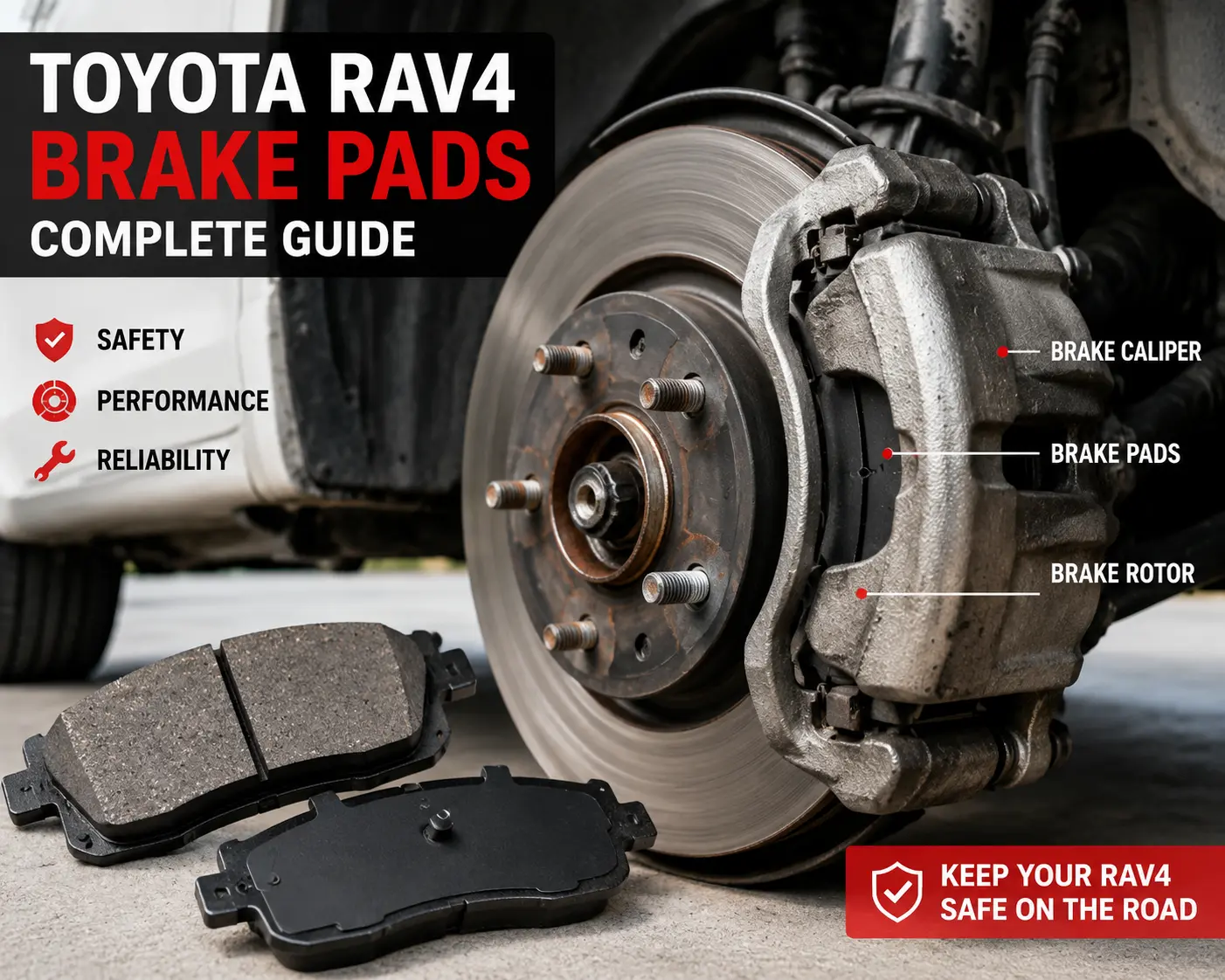
The Toyota RAV4 Brake Pads are one of the most important safety components of your SUV’s braking system. They create friction with the brake rotors to slow down and stop the vehicle safely during normal driving conditions.
Over time, brake pads naturally wear down due to repeated braking, especially in city traffic, heavy loads, and frequent stop-and-go driving. Worn brake pads can reduce braking performance, create unusual noises, and affect overall driving safety.
In this guide, we will explain everything about Toyota RAV4 Brake Pads, including their location, lifespan, replacement signs, types, replacement process, and maintenance tips. This information will help RAV4 owners understand when brake pads need attention and how to keep their braking system working properly.
Toyota RAV4 Brake Pad Location
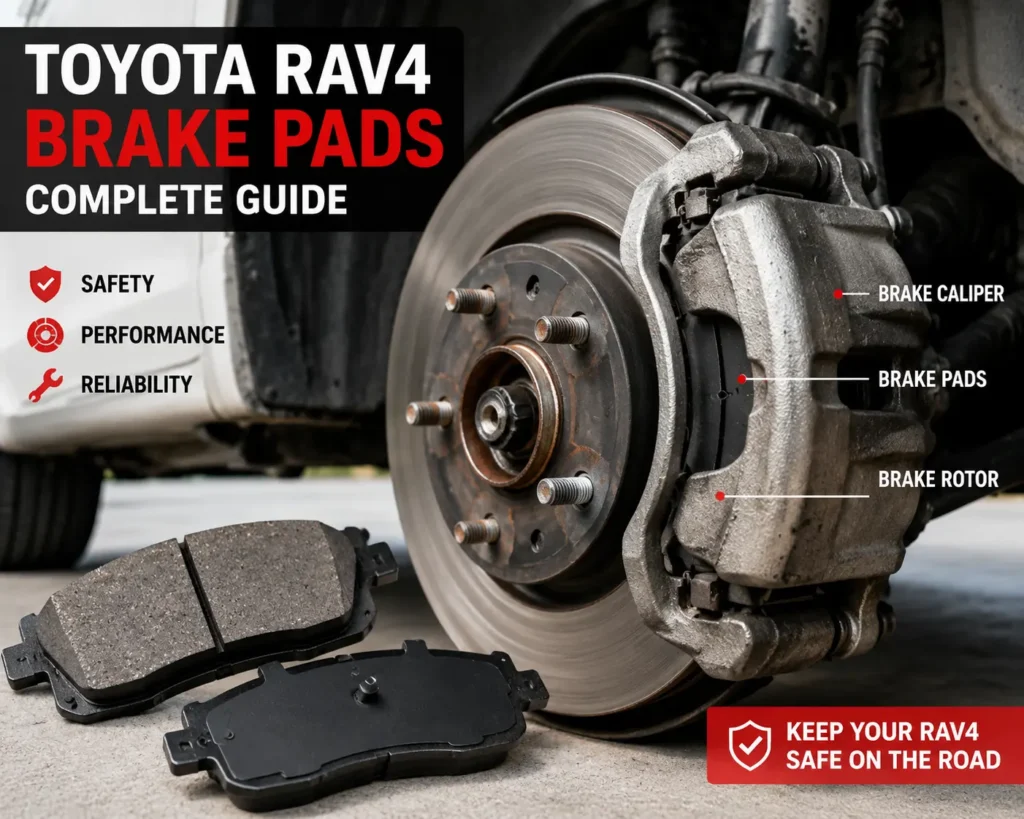
The location of the Toyota RAV4 Brake Pads is inside the vehicle’s braking system, where they sit between the brake caliper and brake rotor. When you press the brake pedal, the caliper pushes the brake pads against the rotor to create friction, which slows down and stops your RAV4.
Toyota RAV4 models have brake pads on both the front and rear wheels. However, front brake pads usually wear faster because they handle more braking force during vehicle operation.
Front Toyota RAV4 Brake Pad Location
The front brake pads are located behind the front wheels and are installed inside the brake caliper assembly.
Front brake pads include:
- Brake pads
- Brake caliper
- Brake rotor
- Caliper mounting components
Because the front brakes handle most of the stopping force, they often require replacement before the rear brake pads.
Rear Toyota RAV4 Brake Pad Location
The rear brake pads are located behind the rear wheels and work with the rear brake rotors to help slow down the vehicle.
Rear brake pads usually last longer than front pads, but their lifespan depends on:
- Driving habits
- Road conditions
- Vehicle load
- Brake system condition
How to Identify Toyota RAV4 Brake Pads
You can identify the brake pads by looking through the wheel area:
- Locate the brake rotor (large metal disc)
- Find the brake caliper around the rotor
- Brake pads are positioned inside the caliper on both sides of the rotor
Understanding the Toyota RAV4 Brake Pads location helps owners inspect wear signs and identify when brake service may be required.
Toyota RAV4 Brake Pad Lifespan and Replacement Interval
The lifespan of Toyota RAV4 Brake Pads depends on driving habits, road conditions, brake usage, and the quality of the brake pads installed. Some drivers may need replacement sooner, while others can use the same brake pads for a longer period.
On average, Toyota RAV4 brake pads can last around 30,000 to 70,000 miles, but frequent city driving, heavy traffic, towing, and aggressive braking can reduce their lifespan.
Average Toyota RAV4 Brake Pad Replacement Interval
| Driving Condition | Expected Brake Pad Life |
|---|---|
| Highway Driving | 50,000–70,000 miles |
| Normal Mixed Driving | 40,000–60,000 miles |
| Heavy City Traffic | 30,000–40,000 miles |
| Towing or Heavy Loads | May require earlier replacement |
Factors That Affect Toyota RAV4 Brake Pad Life
Several factors can influence how long your brake pads last:
- Frequent stop-and-go traffic
- Hard braking habits
- Driving in mountainous areas
- Carrying heavy loads
- Brake rotor condition
- Brake pad material quality
Drivers who use smooth braking techniques can usually extend the life of their Toyota RAV4 Brake Pads.
When Should Toyota RAV4 Brake Pads Be Replaced?
Brake pads should be replaced when:
- Brake pad material becomes too thin
- Braking performance decreases
- Squeaking or grinding noises appear
- Brake pedal feels different
- Vehicle pulls to one side during braking
Replacing worn brake pads on time helps protect the rotors and maintains safe braking performance.
Signs of Worn Toyota RAV4 Brake Pads
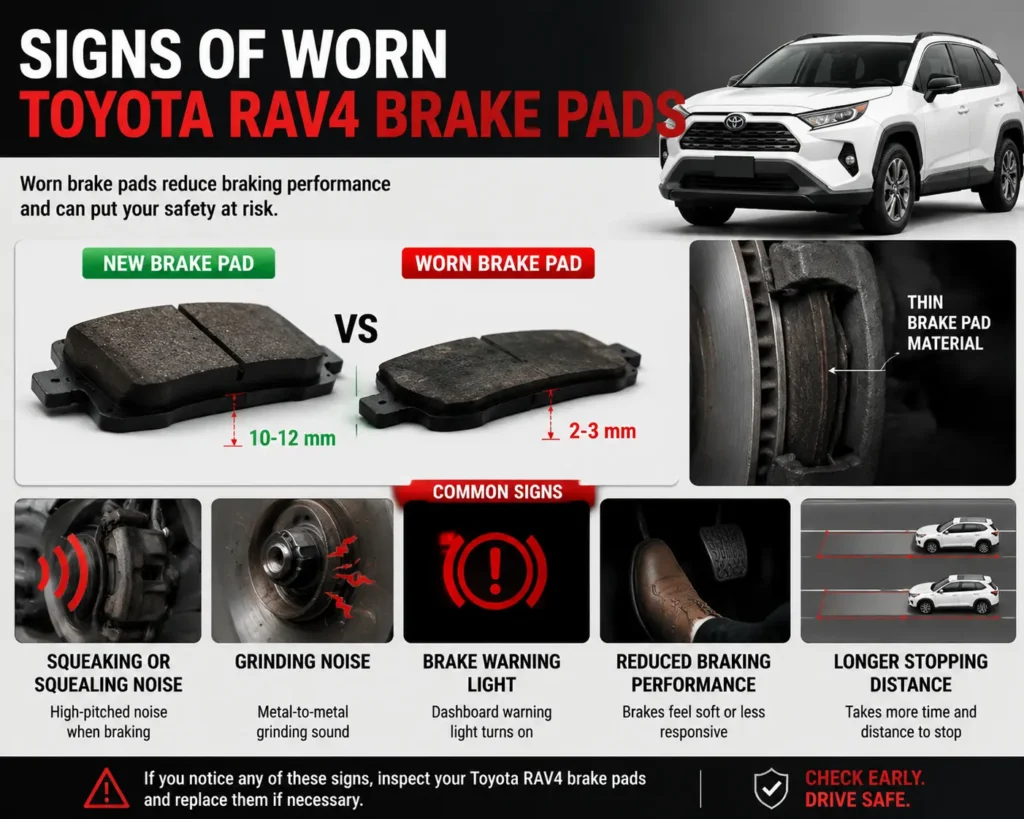
The Toyota RAV4 Brake Pads gradually wear down with regular driving and braking. As the brake pad material becomes thinner, the braking system may start showing warning signs that indicate inspection or replacement is needed.
Ignoring worn brake pads can reduce braking performance and may cause additional damage to brake rotors, increasing repair costs. Recognizing these signs early helps maintain safe and reliable braking.
Squeaking or Squealing Brake Noise
One of the most common signs of worn brake pads is a high-pitched squeaking or squealing sound when applying the brakes.
Many brake pads include a wear indicator that creates a warning noise when the pad material becomes low. If this sound continues, the brake pads should be inspected.
Grinding Noise During Braking
A grinding sound usually indicates that the brake pads are severely worn and the metal backing plate may be contacting the brake rotor.
Driving with grinding brakes can damage the rotors and may require more expensive repairs. Brake inspection should be performed as soon as possible if this symptom appears.
Reduced Braking Performance
Worn Toyota RAV4 Brake Pads can affect how quickly your vehicle stops.
You may notice:
- Longer stopping distance
- Less responsive braking
- Reduced confidence while stopping
Reduced braking performance should never be ignored because brakes are a critical safety system.
Brake Pedal Vibration or Pulsation
If you feel vibration through the brake pedal while braking, the issue may be related to worn brake pads, uneven pad wear, or brake rotor problems.
A professional inspection can help determine whether the brake pads or other braking components need replacement.
Thin Brake Pad Material
A visual inspection can help identify worn brake pads. If the friction material appears very thin compared with a new pad, replacement may be necessary.
Regular inspection of Toyota RAV4 Brake Pads helps prevent braking issues and keeps your vehicle safe on the road.
Toyota RAV4 Brake Pad Replacement Cost
The cost of replacing Toyota RAV4 Brake Pads depends on several factors, including the model year, brake pad quality, labor charges, and whether you are replacing only the pads or additional brake components such as rotors.
In general, brake pad replacement is one of the most common maintenance services for Toyota RAV4 owners. Choosing the right brake pads and replacing them at the correct time helps maintain safe braking performance and prevents damage to other braking components.
Average Toyota RAV4 Brake Pad Replacement Cost
The estimated replacement cost can vary depending on the parts and service location.
| Service Type | Estimated Cost Range |
|---|---|
| Front Brake Pad Replacement | Around $150–$350 |
| Rear Brake Pad Replacement | Around $150–$350 |
| Front and Rear Brake Pads | Around $300–$700 |
| Brake Pads with Rotor Replacement | Higher depending on parts and labor |
These prices are general estimates and may change based on your location, vehicle model year, and selected brake pad brand.
Factors That Affect Brake Pad Replacement Cost
Several factors can influence the total cost of replacing Toyota RAV4 brake pads:
Brake Pad Material:
Ceramic, semi-metallic, and OEM brake pads have different prices and performance levels.
Labor Charges:
Professional installation costs vary between dealerships, repair shops, and independent mechanics.
Vehicle Condition:
If brake rotors, calipers, or other components are damaged, additional repairs may be required.
Brake Pad Quality:
Higher-quality brake pads may cost more initially but can provide better performance and longer service life.
OEM vs Aftermarket Toyota RAV4 Brake Pad Cost
Toyota RAV4 owners can choose between OEM and aftermarket brake pads.
| Type | Cost | Benefits |
|---|---|---|
| OEM Brake Pads | Higher price | Factory specifications and compatibility |
| Aftermarket Brake Pads | Lower to medium price | More options and price ranges |
OEM brake pads are designed specifically for Toyota vehicles, while quality aftermarket options can also provide reliable performance when they match the correct specifications.
How to Reduce Toyota RAV4 Brake Pad Replacement Costs
Proper maintenance can help reduce long-term brake expenses. Regular inspections allow owners to replace brake pads before they damage rotors or other braking components.
Using smooth braking habits, avoiding unnecessary heavy braking, and choosing reliable brake parts can also help extend the life of your Toyota RAV4 Brake Pads.
How to Replace Toyota RAV4 Brake Pads Step by Step
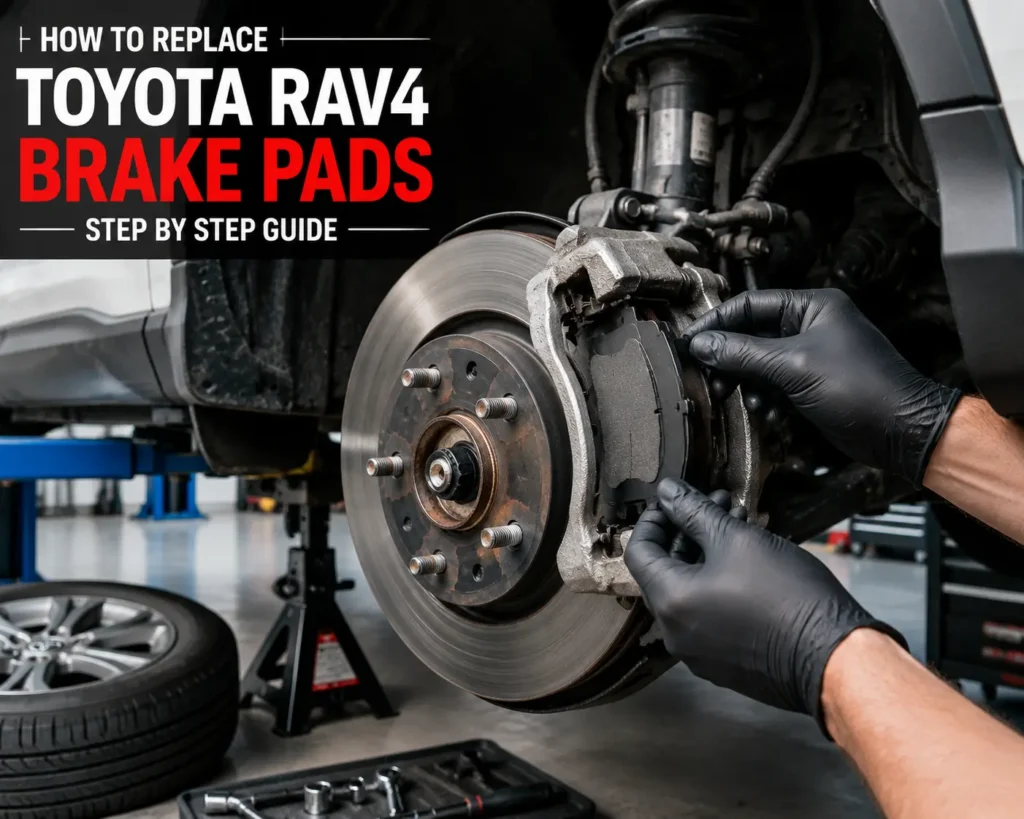
Replacing Toyota RAV4 Brake Pads requires proper tools, safety precautions, and knowledge of the braking system. While many experienced vehicle owners can perform brake pad replacement themselves, correct installation is important because brakes are directly related to vehicle safety.
Before starting the replacement process, always use the correct brake pads for your RAV4 model year and follow proper safety procedures when working around the braking system.
Prepare the Vehicle and Required Tools
Before replacing the brake pads, prepare your Toyota RAV4 in a safe working area.
Required items usually include:
- New Toyota RAV4 Brake Pads
- Jack and jack stands
- Lug wrench
- Socket set
- Brake caliper tool
- Gloves and safety equipment
Make sure the vehicle is parked on a flat surface and the parking brake is applied before beginning the work.
Remove the Wheel and Access the Brake Assembly
After safely lifting the vehicle, remove the wheel to access the brake components.
The brake assembly includes:
- Brake rotor
- Brake caliper
- Brake pads
- Caliper mounting hardware
Inspect the brake components before removing the old pads to check for uneven wear or possible damage.
Remove the Old Brake Pads
Carefully remove the brake caliper and take out the worn brake pads.
During inspection, check for:
- Uneven brake pad wear
- Cracks or damage
- Low friction material thickness
- Rotor condition
If the brake pads are severely worn or the rotors are damaged, additional brake service may be required.
Install the New Toyota RAV4 Brake Pads
Install the new brake pads in the correct position inside the caliper assembly.
Make sure:
- Brake pads are seated properly
- Caliper hardware is installed correctly
- All bolts are tightened according to specifications
Incorrect installation can affect braking performance and create safety issues.
Complete Installation and Test the Brakes
After installing the new brake pads:
- Reinstall the wheel
- Lower the vehicle safely
- Press the brake pedal several times
- Check brake response before normal driving
New brake pads may require a short break-in period to achieve proper contact with the rotors.
Important Brake Pad Replacement Tips
When replacing Toyota RAV4 Brake Pads, remember:
- Replace brake pads in pairs on the same axle
- Inspect rotors during brake service
- Use quality replacement parts
- Do not drive if brakes feel unsafe after installation
Proper brake pad replacement helps maintain reliable stopping power and improves overall driving safety.
OEM vs Aftermarket Toyota RAV4 Brake Pads
Choosing between OEM and aftermarket Toyota RAV4 Brake Pads is an important decision because brake pad quality directly affects braking performance, noise levels, durability, and overall safety.
OEM brake pads are manufactured according to Toyota’s original specifications, while aftermarket brake pads are produced by different brands with various materials and performance levels. The best option depends on your driving style, budget, and maintenance preferences.
OEM Toyota RAV4 Brake Pads
OEM (Original Equipment Manufacturer) brake pads are designed specifically for Toyota RAV4 models and match the factory braking system requirements.
Benefits of OEM brake pads include:
- Exact fit and compatibility
- Consistent braking performance
- Reliable material quality
- Designed for Toyota braking systems
- Lower risk of fitment issues
OEM brake pads are a good choice for owners who want factory-level performance and reliability.
Aftermarket Toyota RAV4 Brake Pads
Aftermarket brake pads are produced by third-party manufacturers and are available in different price ranges and materials.
Some aftermarket options provide excellent performance and may offer additional benefits such as reduced brake dust or improved heat resistance.
However, quality can vary between brands, so it is important to select brake pads that are specifically designed for your Toyota RAV4 model year.
OEM vs Aftermarket Brake Pad Comparison
| Feature | OEM Brake Pads | Aftermarket Brake Pads |
|---|---|---|
| Fitment | Exact Toyota specifications | Depends on manufacturer |
| Price | Usually higher | Available in different price ranges |
| Quality | Factory-tested quality | Varies by brand |
| Availability | Toyota dealers and suppliers | Widely available |
| Performance | Consistent factory performance | Depends on material and brand |
Which Toyota RAV4 Brake Pads Should You Choose?
The right choice depends on your priorities.
Choose OEM Toyota RAV4 Brake Pads if you want:
- Original factory specifications
- Reliable everyday performance
- Maximum compatibility
Choose high-quality aftermarket brake pads if you want:
- More affordable options
- Different performance choices
- Easy availability
Regardless of the type you choose, always make sure the brake pads match your RAV4 model year and are installed correctly for safe braking performance.
Conclusion
The Toyota RAV4 Brake Pads are a critical safety component that helps your vehicle slow down and stop effectively. Over time, brake pads naturally wear due to friction, making regular inspection and timely replacement important for maintaining safe braking performance.
Understanding the signs of worn brake pads, replacement intervals, costs, and available options helps RAV4 owners make better maintenance decisions. Whether you choose OEM or high-quality aftermarket brake pads, selecting the correct parts for your model year is essential for reliable performance.
Regular brake inspections and proper driving habits can extend the life of your Toyota RAV4 Brake Pads and prevent expensive repairs caused by damaged rotors or other braking components. Keeping your braking system in good condition ensures safer and more confident driving.
Toyota RAV4 Brake Pads FAQs
How long do Toyota RAV4 Brake Pads last?
Toyota RAV4 Brake Pads usually last around 30,000 to 70,000 miles depending on driving habits, road conditions, and brake pad quality.
How do I know my RAV4 brake pads need replacement?
Common signs include squeaking noises, grinding sounds, reduced braking performance, and thin brake pad material.
How much does it cost to replace Toyota RAV4 Brake Pads?
Toyota RAV4 Brake Pads replacement usually costs around $150–$350 per axle, depending on parts and labor charges.
Do front or rear brake pads wear faster on RAV4?
Front brake pads usually wear faster because they handle more braking force during stopping.
Can I replace Toyota RAV4 Brake Pads myself?
Yes, experienced DIY owners can replace brake pads with proper tools, but correct installation is important for safety.
Are OEM Toyota RAV4 Brake Pads better?
OEM brake pads provide factory-level compatibility, while quality aftermarket options can also work well if they match your RAV4 model.
Do Toyota RAV4 Hybrid models use different brake pads?
Toyota RAV4 Hybrid models use specific brake components, and the correct brake pads depend on the model year.
Should I replace rotors with Toyota RAV4 Brake Pads?
Rotors do not always need replacement. They should be inspected and replaced only if damaged or worn beyond limits.