Toyota RAV4 PCV valve replacement is an important maintenance task that helps keep your engine running smoothly, improves fuel efficiency, and reduces harmful crankcase pressure. A worn or clogged Positive Crankcase Ventilation (PCV) valve can cause rough idling, poor fuel economy, oil leaks, and even trigger the check engine light if left unchanged.
Although the replacement process is straightforward on most Toyota RAV4 models, the exact PCV valve location and removal steps can vary depending on the model year and engine. Knowing the correct procedure before you begin can save time and help prevent damage to nearby engine components.
In this guide, you’ll learn when to replace the PCV valve, common symptoms of a failing valve, the tools you’ll need, and the step-by-step replacement process. You’ll also discover the recommended replacement interval, average replacement cost, and practical maintenance tips to help extend your engine’s life.
Learn how to replace the Toyota RAV4 PCV valve with this easy step-by-step guide.
Signs of a Bad PCV Valve
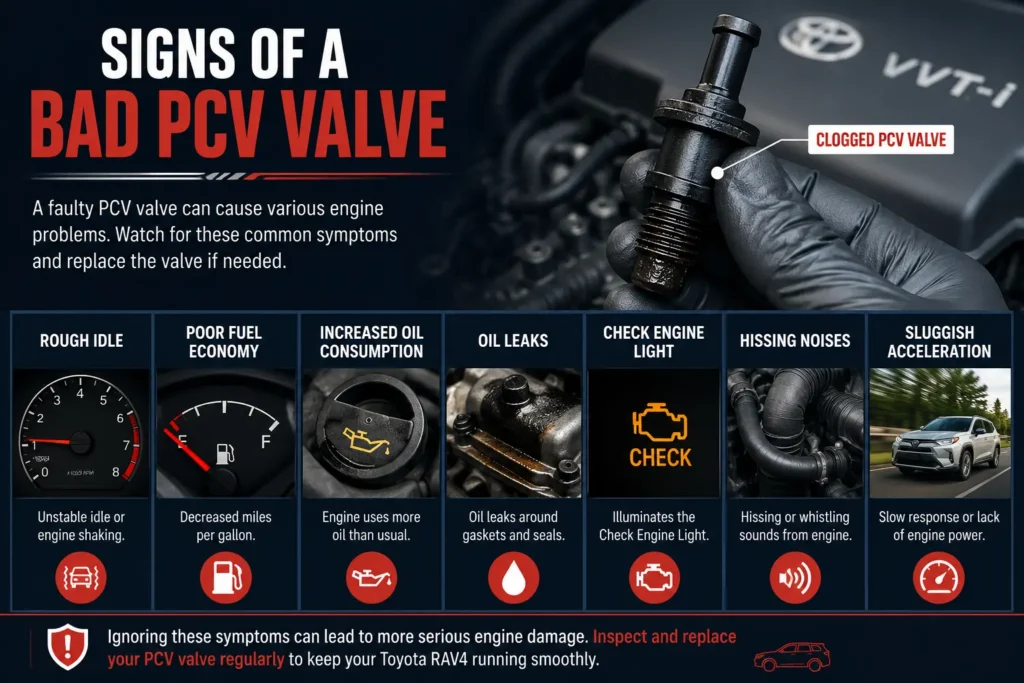
A failing PCV valve can affect your Toyota RAV4’s engine performance, fuel economy, and emissions. If the valve becomes clogged or sticks open, it may disrupt the engine’s air-fuel mixture and increase crankcase pressure. Recognizing the warning signs early can help you avoid more expensive engine repairs.
Common symptoms include:
Rough or unstable idle
Check Engine Light turning on
Poor fuel economy due to an improper air-fuel mixture
Oil leaks caused by excessive crankcase pressure
Whistling or hissing noises from the engine
Sluggish acceleration or reduced engine performance
Excessive exhaust smoke in severe cases
Higher engine oil consumption without visible leaks
Tip: If your Toyota RAV4 shows two or more of these symptoms, inspect the PCV valve before replacing more expensive engine components. A simple PCV valve replacement often solves the problem.
Common warning signs of a failing Toyota RAV4 PCV valve.
When Should You Replace the PCV Valve?
The Toyota RAV4 PCV valve replacement interval depends on the model year, engine condition, and driving habits. While Toyota does not always specify a fixed replacement mileage for every RAV4 generation,most technicians recommend inspecting the PCV valve during routine maintenance, especially after 30,000 miles or whenever engine performance issues appear.
For vehicles driven in dusty environments, frequent stop-and-go traffic, or extreme temperatures, the PCV valve may wear out sooner than expected. Regular inspection helps prevent excessive crankcase pressure, oil leaks, and engine performance issues.
Condition
Recommendation
Normal driving
Inspect every 30,000–50,000 miles
Heavy driving conditions
Inspect every 20,000–30,000 miles
Clogged or damaged valve
Replace immediately
During major engine service
Inspect or replace if necessary
Maintenance Tip: Replacing the PCV valve is inexpensive compared to repairing engine seals or oil leaks caused by excessive crankcase pressure.
Tools You Need
Before starting the Toyota RAV4 PCV valve replacement, gather the correct tools to make the job easier and avoid damaging nearby engine components. Most Toyota RAV4 models require only basic hand tools, making this a beginner-friendly DIY maintenance job.
You’ll need:
A new OEM or high-quality aftermarket PCV valve
Socket wrench with the correct socket size
Ratchet extension (if required)
Needle-nose pliers
Flathead screwdriver
Clean shop rag
Safety gloves
Safety glasses
Pro Tip: Always compare the new PCV valve with the old one before installation to ensure the size, threads, and hose connection match perfectly.
PCV Valve Location
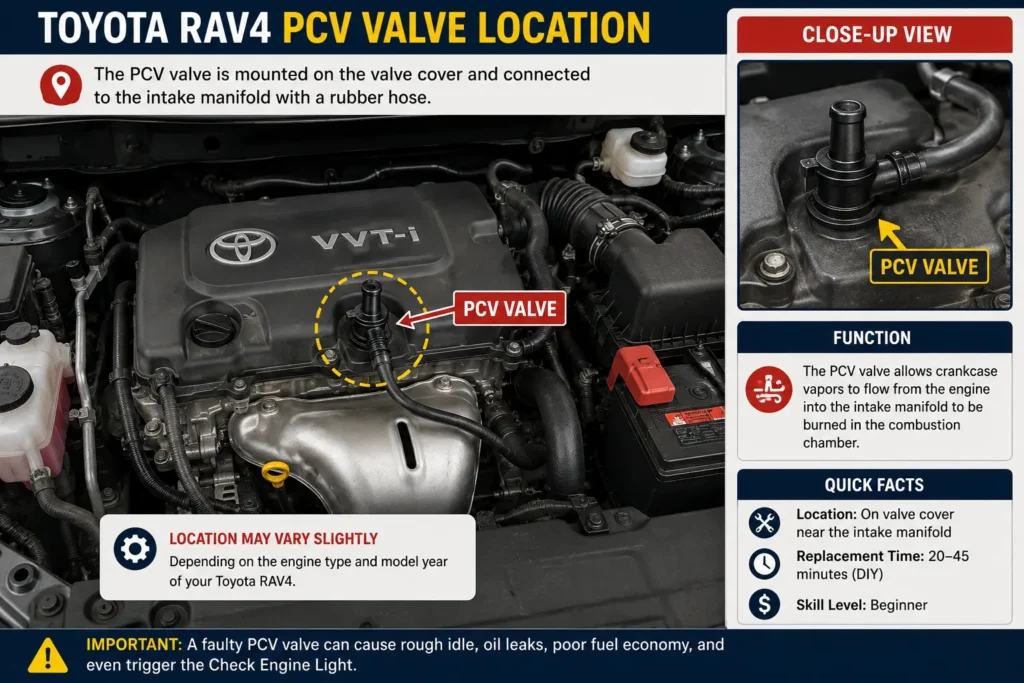
Before replacing the Toyota RAV4 PCV valve, you first need to locate it. The exact location varies depending on the engine and model year, but on most Toyota RAV4 models, the PCV valve is installed on or near the valve cover and is connected to the intake manifold through a rubber hose.
If you’re working on a 2.5L four-cylinder engine, you’ll typically find the PCV valve on the top or rear side of the valve cover. On older RAV4 models or V6 engines, the valve may be positioned differently and could require removing the engine cover or intake components for easier access.
Toyota RAV4 PCV Valve Location by Engine
Toyota RAV4 Engine
Typical PCV Valve Location
2.5L 4-Cylinder
On or near the valve cover
2.0L 4-Cylinder
Near the intake manifold
3.5L V6
Rear bank of the engine, below the intake components
Tip: Some Toyota RAV4 models have a plastic engine cover that must be removed before the PCV valve becomes visible. Always allow the engine to cool before working in the engine bay.
Typical Toyota RAV4 PCV valve location on the engine.
How to Replace the PCV Valve
The Toyota RAV4 PCV valve replacement process usually takes20–45 minutes, depending on the engine type and your experience. Follow these steps carefully to avoid damaging the PCV valve, rubber hose, or nearby engine components.
Step 1 – Park and Prepare
Park the vehicle on a level surface, switch off the engine, and allow it to cool completely. Open the hood and disconnect the negative battery terminal if you’re working near electrical components.
Step 2 – Locate the PCV Valve
Wipe away any dirt or debris around the valve before removing it to prevent contaminants from entering the engine.
Step 3 – Disconnect the Hose
Carefully remove the rubber hose attached to the PCV valve. If the hose is stuck, gently twist it instead of pulling it forcefully to prevent damage.
Step 4 – Remove the Old PCV Valve
Use the appropriate socket or wrench to unscrew the old PCV valve. Some models use a push-fit valve instead of threads, so check your engine before applying force.
Safety Tip: Never force the PCV valve out. If it feels stuck, apply a small amount of penetrating oil and let it sit for a few minutes. This reduces the risk of damaging the valve cover or surrounding components.
Install the New PCV Valve
The next step in the Toyota RAV4 PCV valve replacement process is installing the new valve correctly. Before installation, compare the new PCV valve with the old one to ensure the size, threads, and hose connection are identical.
Step 5 – Install the New PCV Valve
Always use the manufacturer’s recommended torque specification if it is available for your RAV4 model. Once it is seated correctly, tighten it with a socket or wrench until it is snug. Do not overtighten, as this can damage the valve or the valve cover.
Step 6 – Reconnect the Hose
Reconnect the rubber hose securely to the new PCV valve. Make sure the hose fits tightly and is free from cracks or damage. Replace the hose if it shows signs of wear.
Step 7 – Start the Engine
Start the engine and let it idle for a few minutes. Listen for unusual noises, check for vacuum leaks, and make sure the Check Engine Light remains off. If everything appears normal, take the vehicle for a short test drive to confirm the repair. If the Check Engine Light stays on after replacement, scan the vehicle for diagnostic trouble codes (DTCs) to identify any remaining issues.
Pro Tip: After replacing the PCV valve, inspect the surrounding area for oil leaks after your first drive. A quick visual inspection can help confirm that the installation was successful.
PCV Valve Replacement Cost
The Toyota RAV4 PCV valve replacement is one of the most affordable engine maintenance jobs. The overall cost depends on your RAV4 model year, labor rates in your area, and whether you choose an OEM or aftermarket replacement valve. The total cost depends on whether you replace the valve yourself or hire a professional mechanic.
Cost Comparison
Replacement Option
Estimated Cost
DIY Replacement
$15–$50
Professional Mechanic
$80–$180
OEM PCV Valve Only
$15–$35
Aftermarket PCV Valve
$10–$30
Most DIY owners can complete the replacement in less than an hour using basic hand tools, making it an inexpensive way to prevent future engine problems. Keep in mind that prices may vary depending on your location, the repair shop, and the specific Toyota RAV4 model.
Money-Saving Tip: Replacing a faulty PCV valve early can help prevent expensive repairs caused by excessive crankcase pressure, including oil leaks and damaged engine seals.
Common Mistakes to Avoid
Avoiding a few common mistakes during the Toyota RAV4 PCV valve replacement can help prevent engine damage and ensure the new valve works properly.
Common PCV Valve Replacement Mistakes
Installing the wrong PCV valve for your engine.
Overtightening the new PCV valve.
Reusing a cracked or damaged PCV hose.
Forgetting to inspect the hose for vacuum leaks.
Replacing the valve while the engine is still hot.
Ignoring the Check Engine Light after installation.
Failing to compare the old and new PCV valve before installation.
Skipping a final inspection for oil or vacuum leaks after installation.
Expert Tip: Always purchase a PCV valve that matches your Toyota RAV4’s engine and model year. Even small differences in design can affect engine performance and emissions.
Conclusion
Toyota RAV4 PCV valve replacement is a simple but important maintenance task that helps improve engine performance, reduce crankcase pressure, and prevent costly repairs.. With the right tools and a careful step-by-step approach, most owners can complete the job at home in less than an hour.
Inspecting the PCV valve regularly and replacing it when necessary helps maintain proper engine ventilation, improve fuel efficiency, and reduce the risk of oil leaks or rough idling. Even though the replacement is inexpensive, delaying it can lead to more serious engine problems over time.
Whether you choose to perform the Toyota RAV4 PCV valve replacement yourself or hire a professional mechanic, using a quality replacement part and following the correct installation procedure will help keep your RAV4 running reliably for years to come.
The Toyota RAV4 PCV valve replacement is one of the easiest maintenance tasks you can perform to protect your engine and improve long-term reliability. By following the correct Toyota RAV4 PCV valve replacement procedure, using the right tools, and installing a quality replacement part, you can avoid unnecessary engine problems. Whether you choose a DIY approach or visit a mechanic, completing the Toyota RAV4 PCV valve replacement at the recommended interval helps maintain smooth engine performance. Regular Toyota RAV4 PCV valve replacement also reduces the risk of oil leaks, poor fuel economy, and excessive crankcase pressure.
FAQs
How often should I replace the PCV valve on a Toyota RAV4?
Most Toyota RAV4 owners should inspect the PCV valve every 30,000–50,000 miles. Replace it if it becomes clogged, damaged, or causes symptoms such as rough idling, oil leaks, or poor fuel economy.
What are the symptoms of a bad PCV valve?
Common signs include rough idle, poor fuel economy, increased oil consumption, oil leaks, a Check Engine Light, sluggish acceleration, and unusual hissing noises from the engine.
Can I replace the Toyota RAV4 PCV valve myself?
Yes. The Toyota RAV4 PCV valve replacement is considered a beginner-friendly DIY job on most models. With basic hand tools and the correct replacement valve, many owners can complete the task in 20–45 minutes.
How much does a Toyota RAV4 PCV valve replacement cost?
A DIY replacement typically costs $15–$50, while a professional mechanic may charge $80–$180, depending on labor rates, your location, and the RAV4 model year.
Can a bad PCV valve cause oil leaks?
Yes. A clogged PCV valve can increase crankcase pressure, forcing oil past engine seals and gaskets. Replacing the faulty valve early can help prevent expensive oil leak repairs.
Where is the PCV valve located on a Toyota RAV4?
On most Toyota RAV4 models, the PCV valve is mounted on or near the valve cover and connected to the intake manifold with a rubber hose. The exact location depends on the engine and model year.
Is it safe to drive with a bad PCV valve?
You can usually drive for a short period, but it is not recommended. Ignoring a faulty PCV valve can lead to poor engine performance, increased oil consumption, higher emissions, and potential engine damage over time.
Should I use an OEM or aftermarket PCV valve?
An OEM PCV valve is generally the best choice because it is designed specifically for your Toyota RAV4. A high-quality aftermarket valve can also perform well if it matches your vehicle’s engine and model year.
Is Toyota RAV4 PCV Valve Replacement Worth It?
Yes, Toyota RAV4 PCV valve replacement is absolutely worth it because it is inexpensive and helps prevent more costly engine repairs. Performing Toyota RAV4 PCV valve replacement at the recommended maintenance interval improves engine ventilation, supports better fuel efficiency, and helps your Toyota RAV4 run smoothly for years.