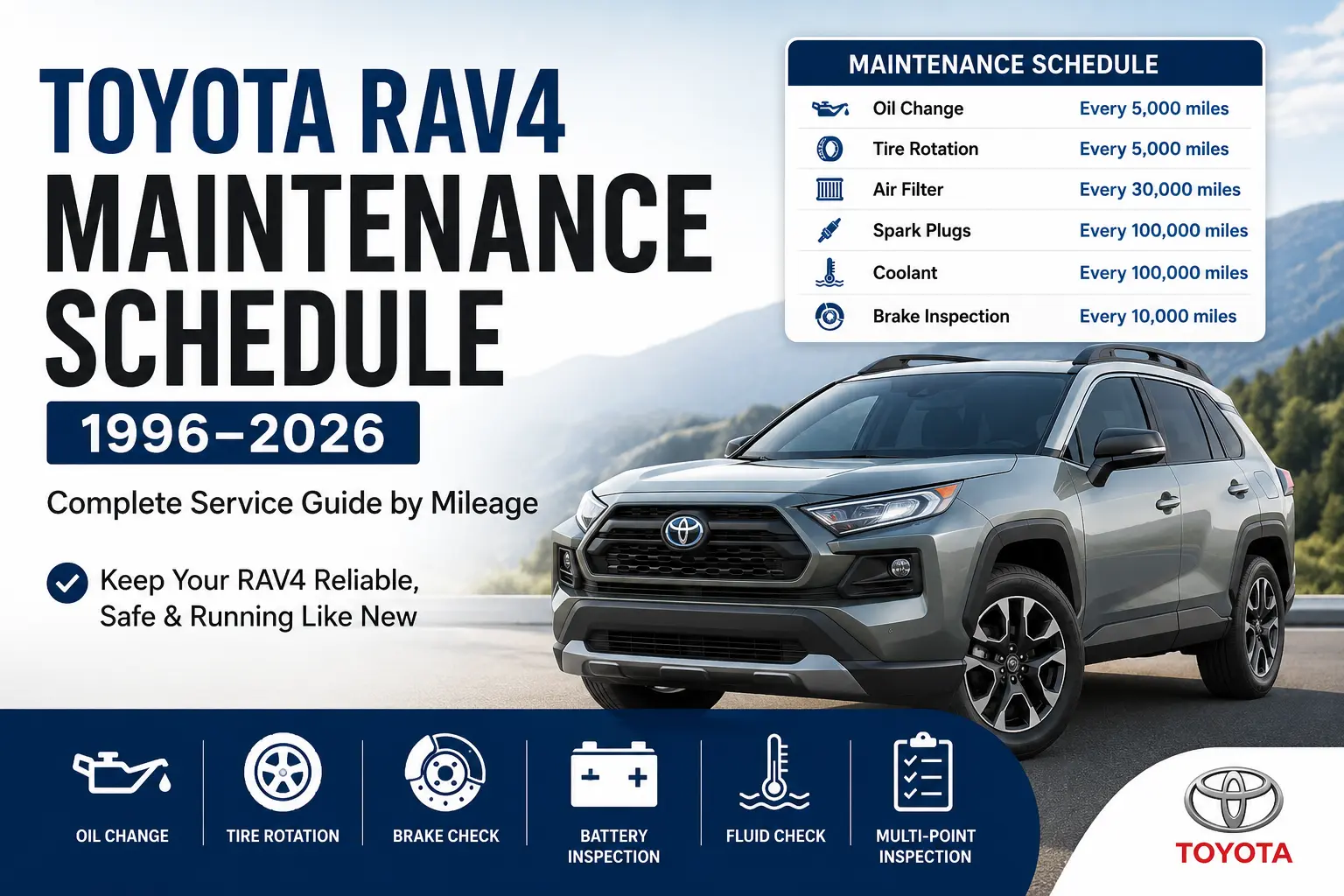
Keeping up with the Toyota RAV4 maintenance schedule is one of the best ways to improve your SUV’s reliability, fuel economy, and resale value. Whether you own an older RAV4 or the latest hybrid model, following Toyota’s recommended service intervals helps prevent expensive repairs and keeps your vehicle performing at its best.
Toyota recommends inspecting and replacing certain components at specific mileage intervals, such as engine oil, filters, brakes, tires, coolant, transmission fluid, and spark plugs. While some maintenance tasks are required every 5,000 miles (8,000 km), others are only needed after 60,000, 100,000, or even 120,000 miles.
In this guide, you’ll find the complete Toyota RAV4 maintenance schedule by mileage, easy-to-read service tables, maintenance tips, and answers to common questions. Whether you’re maintaining a gasoline, hybrid, or plug-in hybrid (RAV4 Prime), this guide will help you stay on schedule and protect your investment.
Toyota RAV4 Maintenance Schedule by Mileage
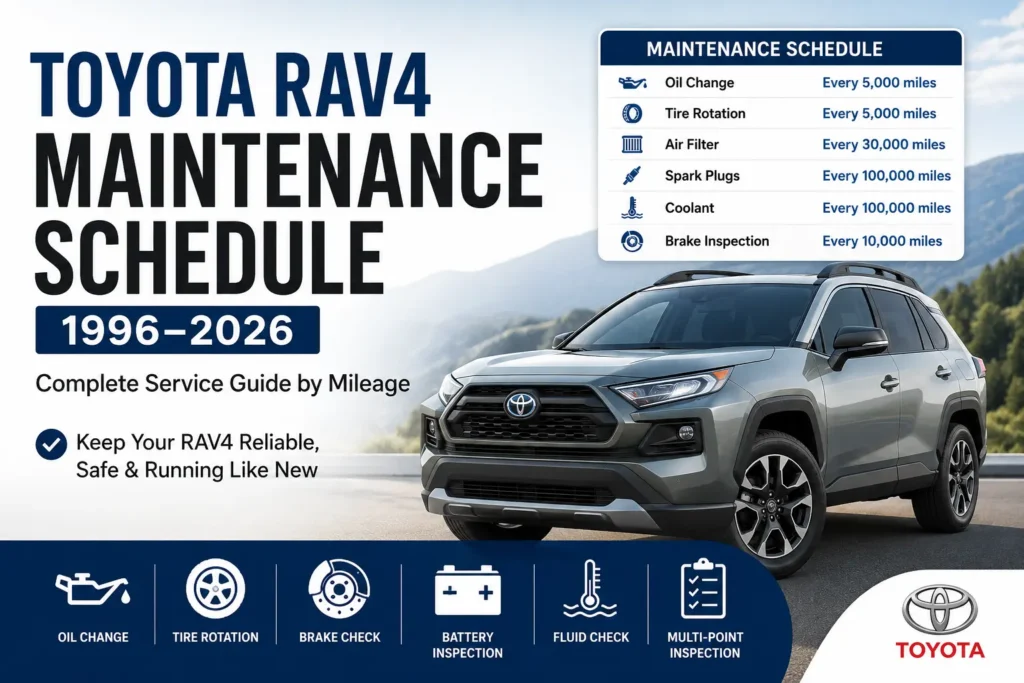
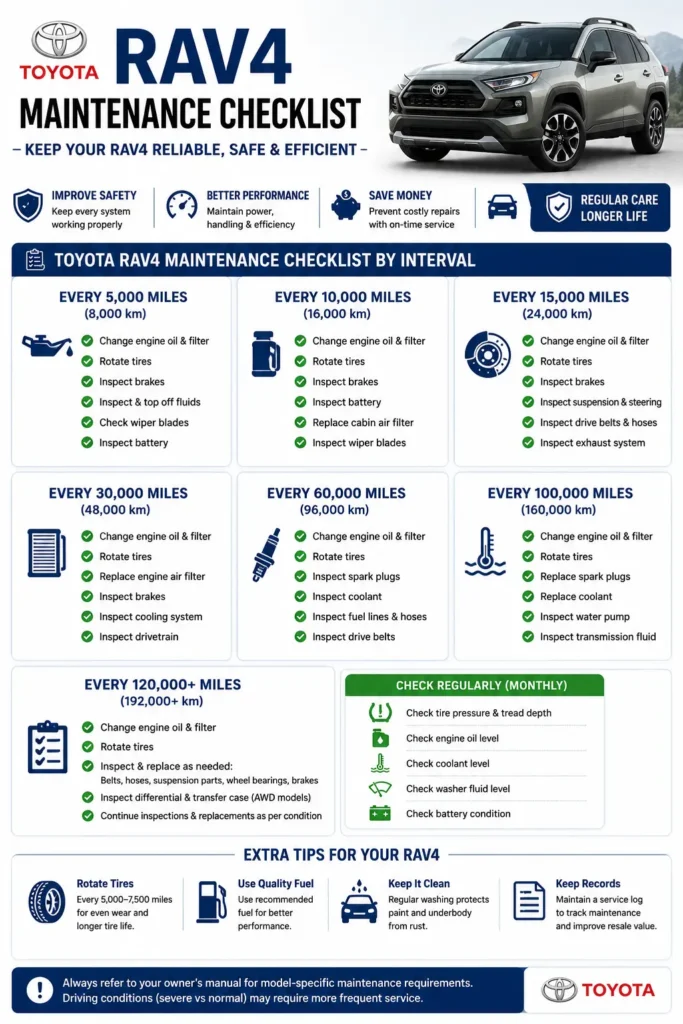
Following the Toyota RAV4 maintenance schedule is the easiest way to keep your SUV running safely and efficiently. Toyota recommends regular inspections and maintenance every 5,000 miles (8,000 km), with additional services required at higher mileage intervals. Staying on schedule can improve fuel economy, extend engine life, and help you avoid costly repairs.
The table below provides a quick overview of the recommended maintenance intervals for most Toyota RAV4 models. Keep in mind that your exact service requirements may vary depending on the model year, engine type, and driving conditions.
Toyota RAV4 Maintenance Schedule Table
| Mileage | Recommended Maintenance |
|---|---|
| Every 5,000 miles | Rotate tires, inspect brakes, check fluid levels, inspect steering and suspension. |
| Every 10,000 miles | Replace engine oil and oil filter, rotate tires, inspect battery and wiper blades. |
| Every 15,000 miles | Inspect drive belts, replace cabin air filter if necessary. |
| Every 30,000 miles | Replace engine air filter, inspect cooling system and brake components. |
| Every 60,000 miles | Inspect spark plugs, coolant condition, and fuel system. |
| Every 100,000 miles | Replace spark plugs (if required), replace engine coolant, inspect hoses and water pump. |
| Every 120,000+ miles | Continue scheduled inspections and replace worn components as needed. |
Toyota RAV4 Maintenance Schedule Explained
While the table above provides a quick overview of the Toyota RAV4 maintenance schedule, understanding what each service includes is just as important. Some maintenance items, such as oil changes and tire rotations, should be performed frequently, while others like coolant replacement and spark plug replacement are required only after higher mileage. Following these recommended intervals helps maximize engine performance, improve safety, and reduce the risk of unexpected repairs.
Below is a detailed explanation of the most important maintenance services included in the Toyota RAV4 maintenance schedule.
Every 5,000 Miles (8,000 km)
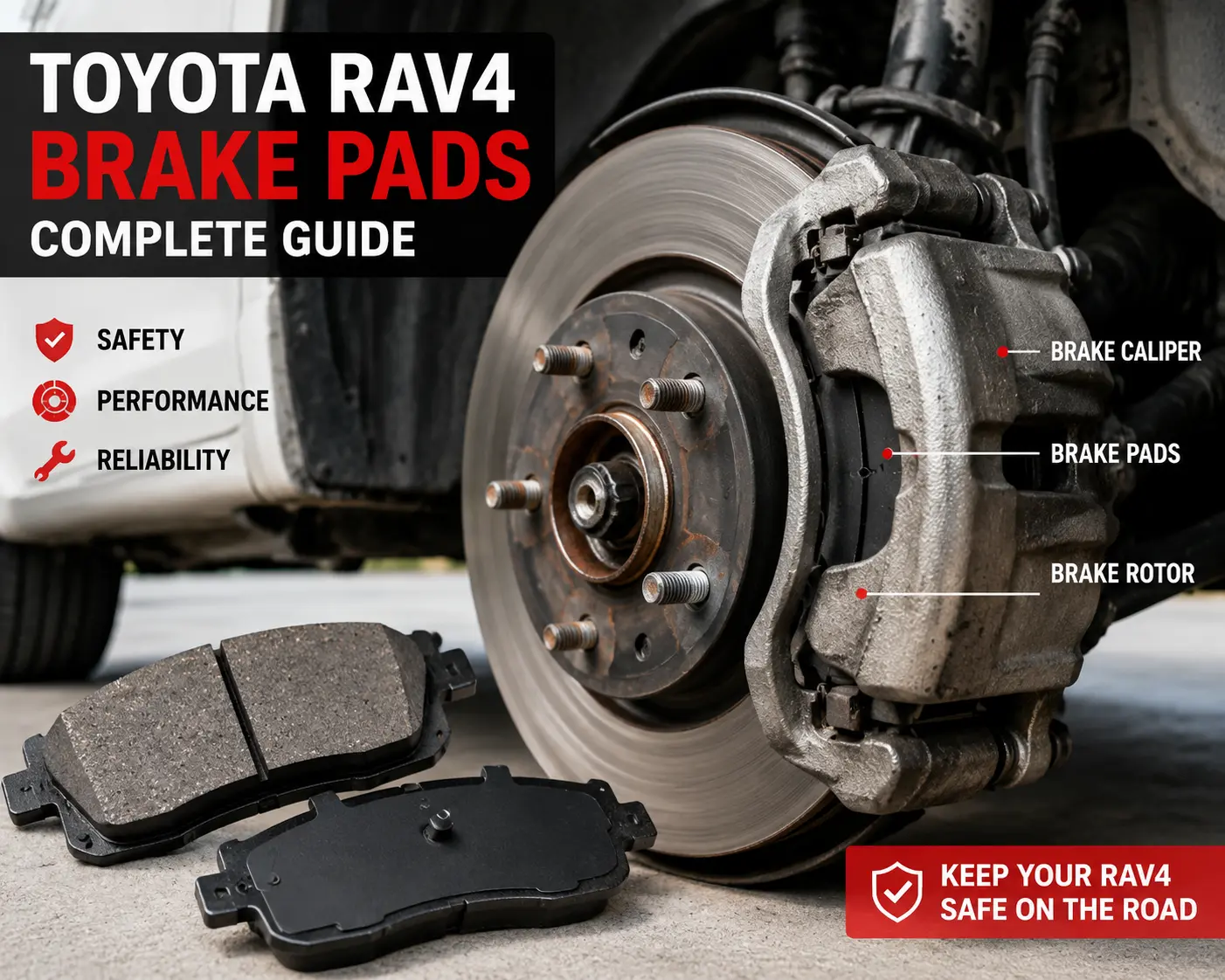
Every 5,000 miles is the foundation of the Toyota RAV4 maintenance schedule. At this interval, your vehicle should receive a general inspection along with a tire rotation to promote even tire wear. The braking system, steering components, suspension, and fluid levels should also be checked to ensure everything is operating correctly.
If you frequently drive in dusty conditions, heavy traffic, or tow a trailer, your vehicle may require additional maintenance at this interval.
Every 10,000 Miles (16,000 km)
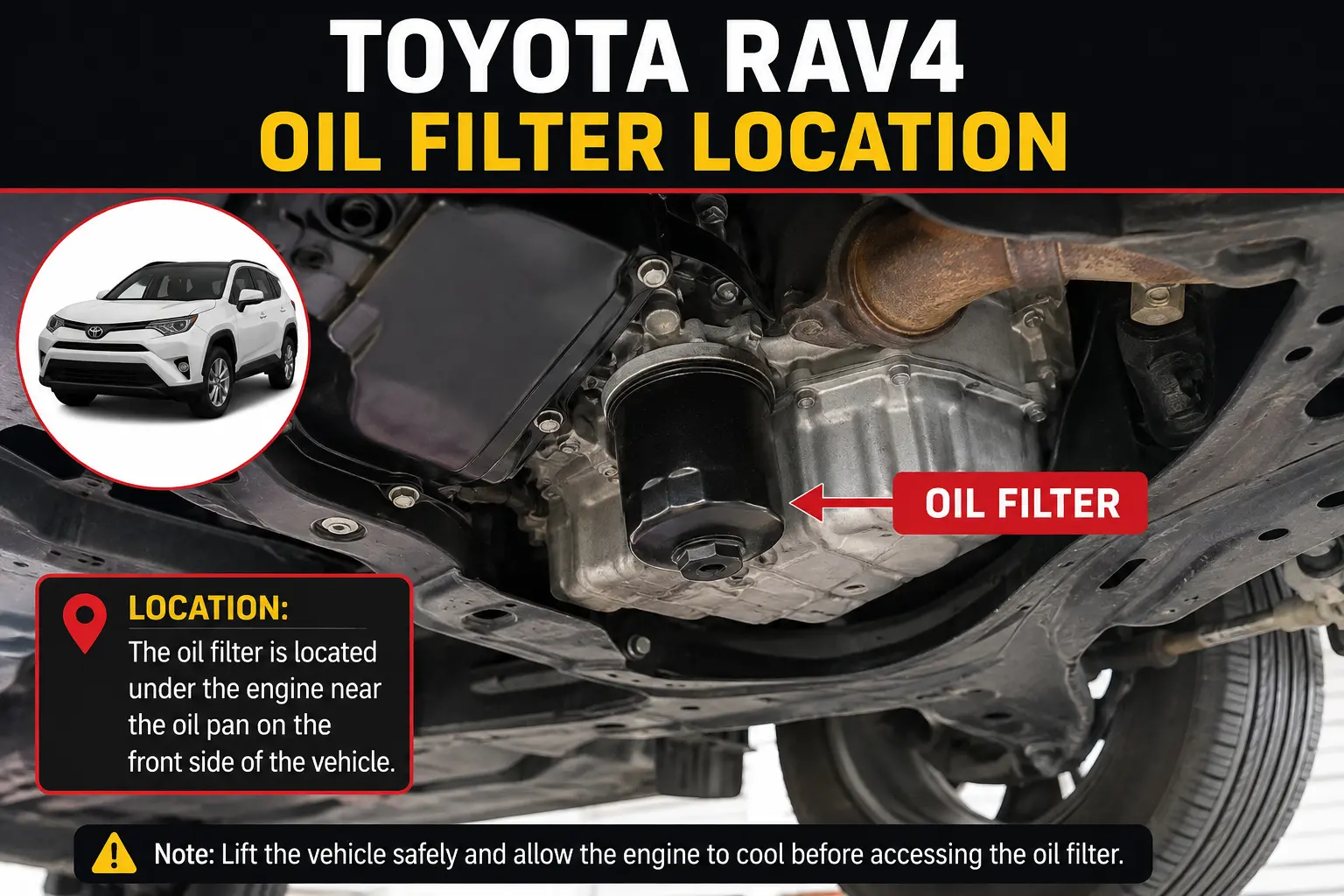
At 10,000 miles, Toyota generally recommends replacing the engine oil and oil filter in addition to rotating the tires. The battery, windshield wiper blades, and brake system should also be inspected. Keeping fresh engine oil in your RAV4 helps reduce engine wear and improves fuel efficiency.
Regular inspections at this interval can identify small issues before they become expensive repairs.
Every 15,000 Miles (24,000 km)
During the 15,000-mile service, continue performing all previous inspections while paying closer attention to the cabin air filter and drive belts. Replacing a dirty cabin air filter improves airflow inside the vehicle and helps your HVAC system operate more efficiently.
Technicians should also inspect hoses and other rubber components for signs of wear or cracking.
Every 30,000 Miles (48,000 km)
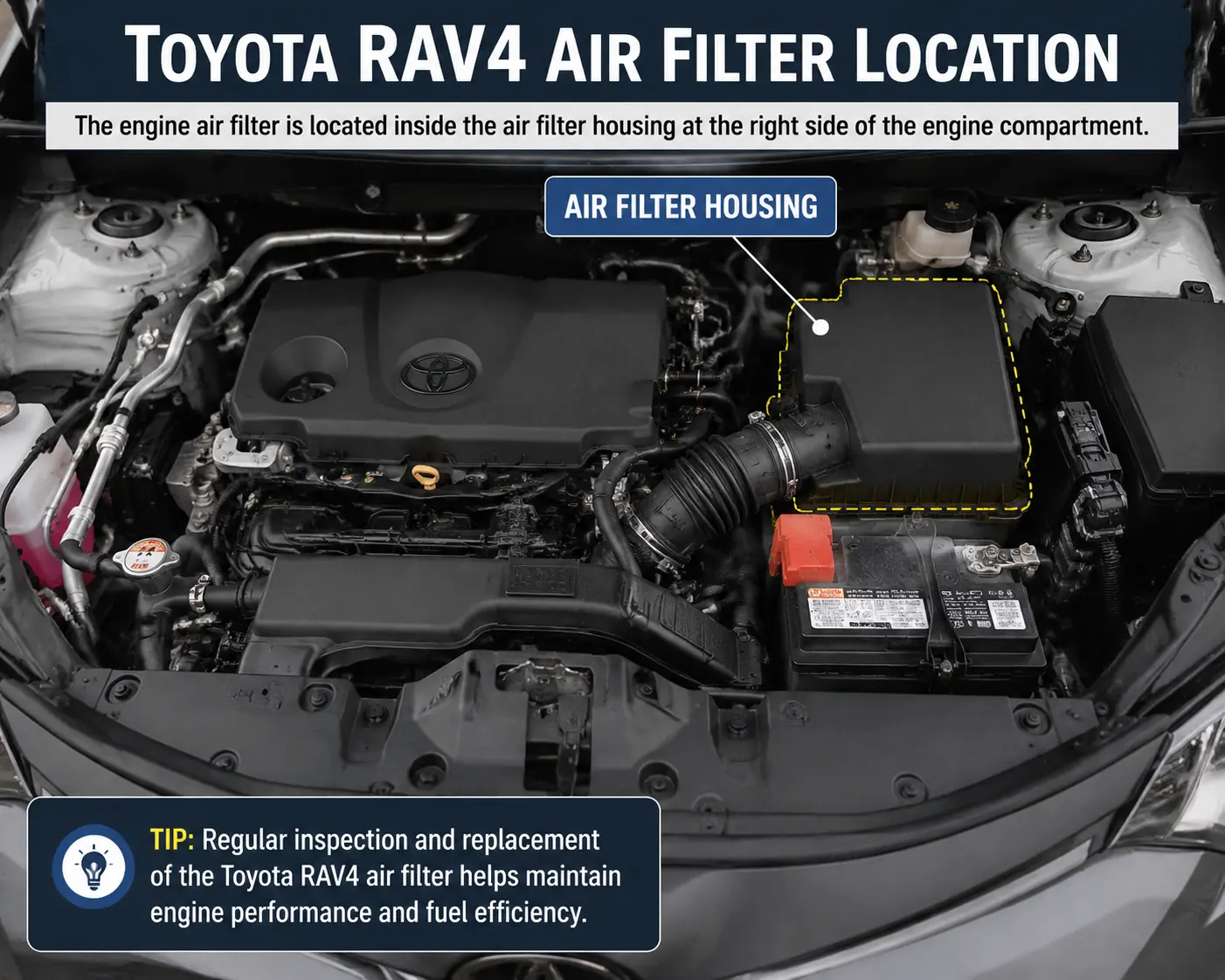
At the 30,000-mile service interval, the Toyota RAV4 maintenance schedule becomes more comprehensive. In addition to routine inspections, Toyota recommends replacing the engine air filter and carefully inspecting the cooling system, brake components, suspension, and drivetrain. A clean engine air filter helps maintain proper airflow, improves engine performance, and can contribute to better fuel economy.
This is also a good time to inspect the exhaust system, steering components, and wheel alignment if you notice uneven tire wear or changes in vehicle handling.
Every 60,000 Miles (96,000 km)
Once your RAV4 reaches 60,000 miles, several major components should receive a thorough inspection. Depending on your model year and engine, spark plugs may need inspection or replacement, while the cooling system, fuel lines, hoses, and drive belts should also be checked for signs of wear.
Following the Toyota RAV4 maintenance schedule at this stage helps prevent unexpected breakdowns and keeps the engine operating efficiently for the long term.
Every 100,000 Miles (160,000 km)
The 100,000-mile service is one of the most important milestones in the Toyota RAV4 maintenance schedule. Many models require spark plug replacement at this interval, along with engine coolant replacement if it has not already been serviced. The water pump, radiator hoses, and cooling system should also be inspected to ensure reliable engine cooling.
Completing these services on time can significantly extend the life of your engine and reduce the risk of costly repairs.
Every 120,000 Miles and Beyond
After 120,000 miles, continue following the Toyota RAV4 maintenance schedule by repeating regular inspection intervals and replacing components based on their condition. Suspension parts, wheel bearings, brake components, belts, hoses, and other wear items may require replacement as the vehicle ages.
With proper maintenance, many Toyota RAV4 models can easily exceed 200,000 miles while remaining dependable and safe to drive.
Normal vs. Severe Driving Conditions
The recommended Toyota RAV4 maintenance schedule is based on normal driving conditions. However, if you frequently drive in heavy traffic, extremely hot or cold weather, dusty environments, mountainous areas, or regularly tow a trailer, your vehicle may require more frequent maintenance.
Under severe driving conditions, engine oil, air filters, brakes, and other components experience additional wear. Following the severe maintenance schedule in your owner’s manual helps protect your engine and maintain long-term reliability.
Normal Driving Conditions
Normal driving includes daily commuting on paved roads, moderate highway driving, and operating the vehicle in average weather conditions. If your RAV4 is mainly used under these circumstances, following Toyota’s standard maintenance intervals is generally sufficient to keep the vehicle in excellent condition.
Severe Driving Conditions
Your Toyota RAV4 may require more frequent maintenance if you regularly:
- Drive on dusty or unpaved roads
- Tow a trailer or carry heavy loads
- Spend long periods in stop-and-go traffic
- Drive in extremely hot or freezing temperatures
- Frequently travel through mountainous or steep terrain
- Make repeated short trips where the engine does not fully warm up
In these situations, replacing engine oil, inspecting brakes, checking filters, and monitoring fluid levels more often can help prevent premature wear and expensive repairs.
Essential Maintenance Tips for Toyota RAV4 Owners
Following the Toyota RAV4 maintenance schedule is only part of keeping your SUV in excellent condition. Practicing good maintenance habits between scheduled services can improve reliability, fuel efficiency, and the overall lifespan of your vehicle.
Here are a few maintenance tips every Toyota RAV4 owner should follow:
- Check engine oil and coolant levels regularly.
- Maintain the recommended tire pressure.
- Rotate tires every 5,000–7,500 miles.
- Replace dirty air filters when necessary.
- Listen for unusual noises and address problems early.
- Wash the underbody regularly if you drive on salted roads.
- Keep detailed service records for future maintenance and resale value.
Conclusion
Following the Toyota RAV4 maintenance schedule is one of the smartest ways to protect your investment and keep your SUV performing at its best. Routine maintenance such as oil changes, tire rotations, brake inspections, and filter replacements helps improve reliability, fuel efficiency, and overall driving safety. Staying on schedule also reduces the risk of unexpected breakdowns and costly repairs.
Whether you own an older Toyota RAV4 or a newer gasoline, hybrid, or plug-in hybrid model, following the recommended service intervals ensures that every major component continues to operate efficiently. Regular inspections allow small issues to be identified early before they become expensive mechanical problems.
By using this Toyota RAV4 maintenance schedule as a general guide and referring to your owner’s manual for model-specific recommendations, you can extend the lifespan of your vehicle and enjoy dependable performance for many years. Consistent maintenance not only keeps your RAV4 in excellent condition but also helps preserve its long-term resale value.
Frequently Asked Questions (FAQs)
How often should I follow the Toyota RAV4 maintenance schedule?
Toyota recommends following the Toyota RAV4 maintenance schedule every 5,000 miles (8,000 km) or every six months, whichever comes first. Regular maintenance helps keep your SUV reliable, improves fuel efficiency, and reduces the likelihood of costly repairs.
What maintenance is required at 30,000 miles for a Toyota RAV4?
At the 30,000-mile service, Toyota typically recommends replacing the engine air filter, inspecting the cooling system, brakes, suspension, steering components, and drivetrain. Depending on your driving habits and vehicle condition, additional inspections or replacements may also be necessary.
When should the spark plugs be replaced on a Toyota RAV4?
Most Toyota RAV4 models equipped with iridium spark plugs require replacement at around 100,000 to 120,000 miles. However, the exact interval may vary depending on the model year and engine type, so always check your owner’s manual.
Does the Toyota RAV4 maintenance schedule differ for hybrid models?
Yes. While many maintenance tasks are the same, hybrid models have additional components such as the hybrid battery system and regenerative braking system that require periodic inspections. Always follow the maintenance schedule designed for your specific RAV4 model.
Can I perform Toyota RAV4 maintenance myself?
Yes. Basic maintenance tasks such as checking fluid levels, replacing windshield wiper blades, inspecting tire pressure, and replacing the engine air filter can often be performed at home. However, more advanced services like coolant replacement, transmission maintenance, or brake repairs should be handled by a qualified technician.
What happens if I skip the Toyota RAV4 maintenance schedule?
Skipping the Toyota RAV4 maintenance schedule can lead to increased engine wear, reduced fuel economy, unexpected breakdowns, and expensive repairs. Keeping up with regular maintenance also helps maintain your vehicle’s performance, safety, and resale value.