The Toyota RAV4 Ground Clearance is one of the most important specifications for drivers who frequently travel on rough roads, gravel tracks, snow-covered streets, or light off-road terrain. Ground clearance refers to the distance between the lowest point of the vehicle and the ground, directly affecting the SUV’s ability to pass over obstacles without scraping its underside.
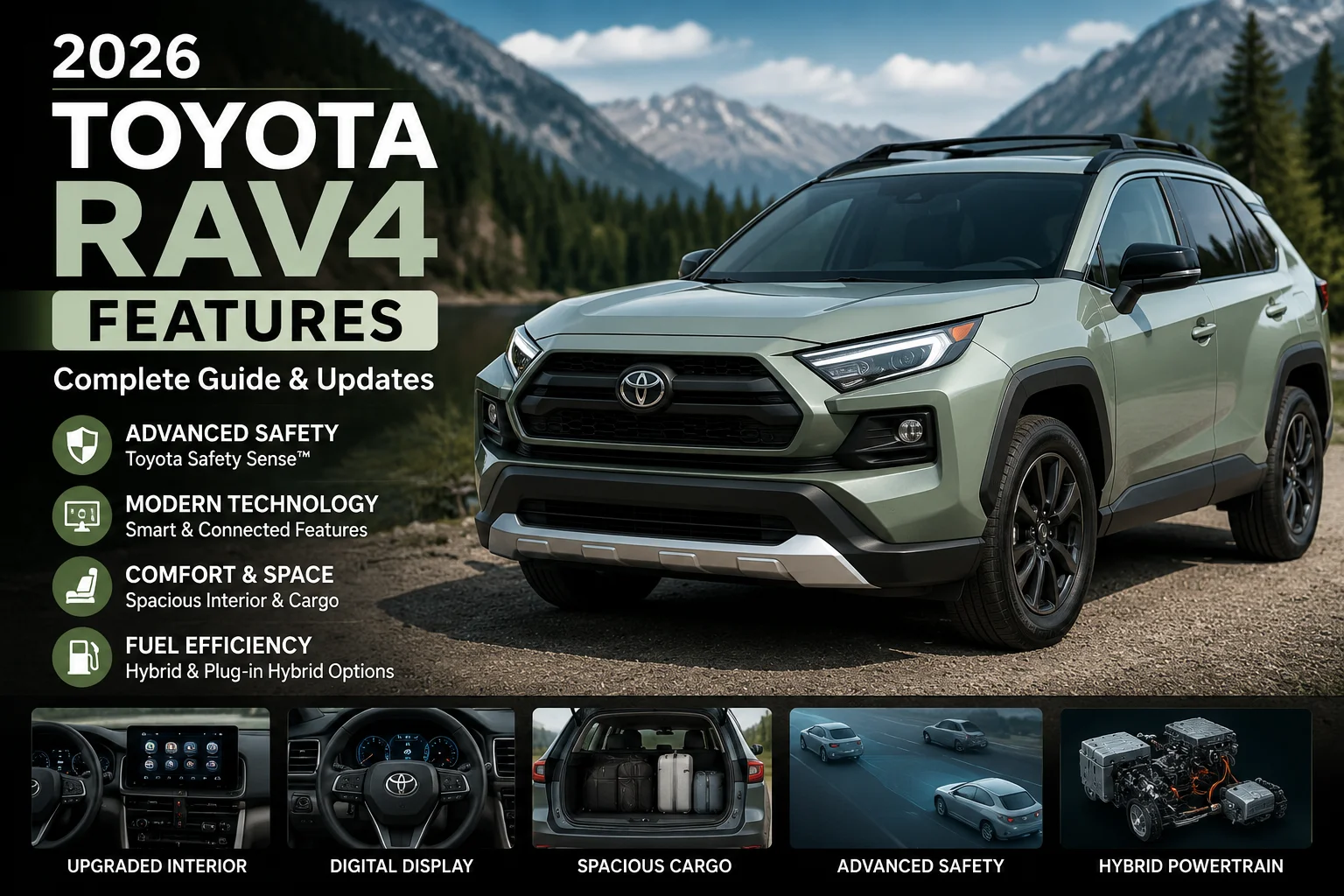
The Toyota RAV4 has earned a reputation as a versatile compact SUV that balances daily driving comfort with practical off-road capability. Whether you’re considering a standard RAV4, Hybrid, or Woodland Edition, understanding the Toyota RAV4 Ground Clearance can help you choose the right model for your driving needs.
In this guide, we’ll cover the Toyota RAV4 Ground Clearance for every trim level, explain why it matters, compare it with competitors, and discuss how it affects off-road performance, ride quality, and everyday usability.
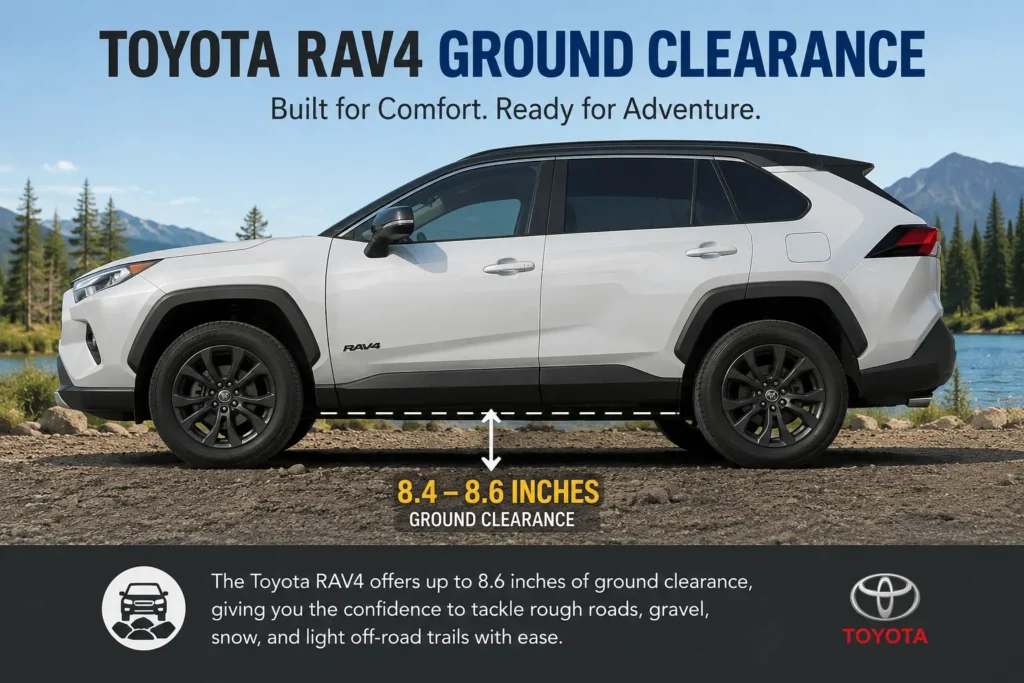
What Is the Ground Clearance of the Toyota RAV4?
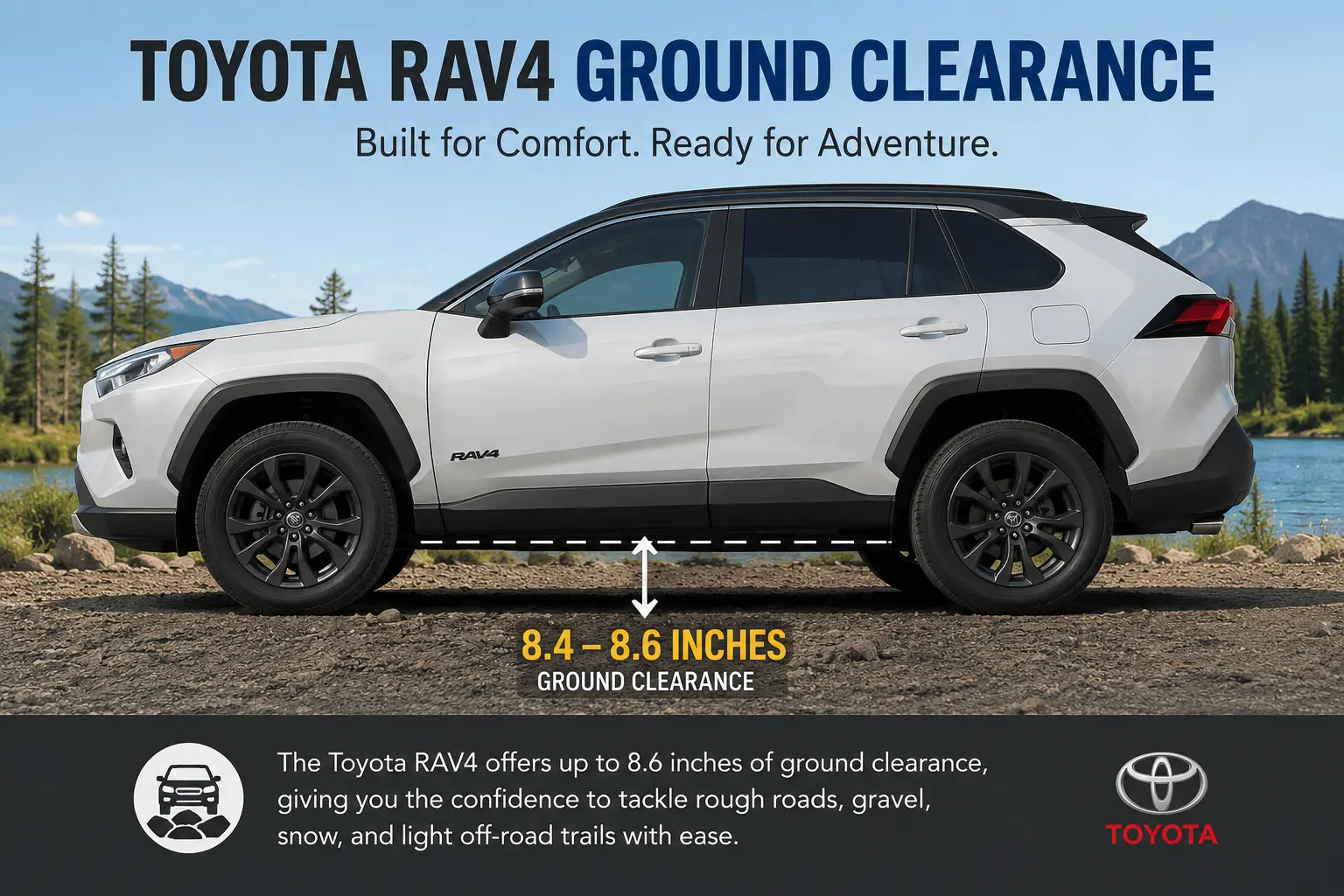
The Toyota RAV4 offers approximately 8.4 to 8.6 inches of ground clearance, depending on the model year and trim level. This is higher than many compact crossovers, making the RAV4 a practical choice for drivers who encounter rough roads, snow, gravel paths, or occasional off-road conditions.
Most modern Toyota RAV4 models provide enough clearance to comfortably handle speed bumps, uneven pavement, dirt roads, and light trails without damaging the underside of the vehicle. Models such as the Woodland Edition offer slightly higher clearance and are designed for more adventurous driving.
Toyota RAV4 Ground Clearance at a Glance
- Standard RAV4: 8.4 inches
- RAV4 Hybrid: 8.1–8.4 inches
- RAV4 Woodland Edition: Up to 8.6 inches
- RAV4 TRD Off-Road (where available): Around 8.6 inches
Toyota RAV4 Ground Clearance by Trim Level
Ground clearance can vary slightly depending on the Toyota RAV4 trim you choose. While most models provide enough height for everyday driving and light off-road use, some trims are specifically designed to handle rougher terrain. The table below shows the ground clearance for popular Toyota RAV4 models.
| Toyota RAV4 Trim | Ground Clearance |
| LE | 8.4 inches |
| XLE | 8.4 inches |
| XLE Premium | 8.4 inches |
| Adventure | 8.6 inches |
| TRD Off-Road | 8.6 inches |
| Hybrid LE | 8.1 inches |
| Hybrid XLE | 8.1 inches |
| Woodland Edition | 8.6 inches |
| Prime SE | 8.0 inches |
| Prime XSE | 8.2 inches |
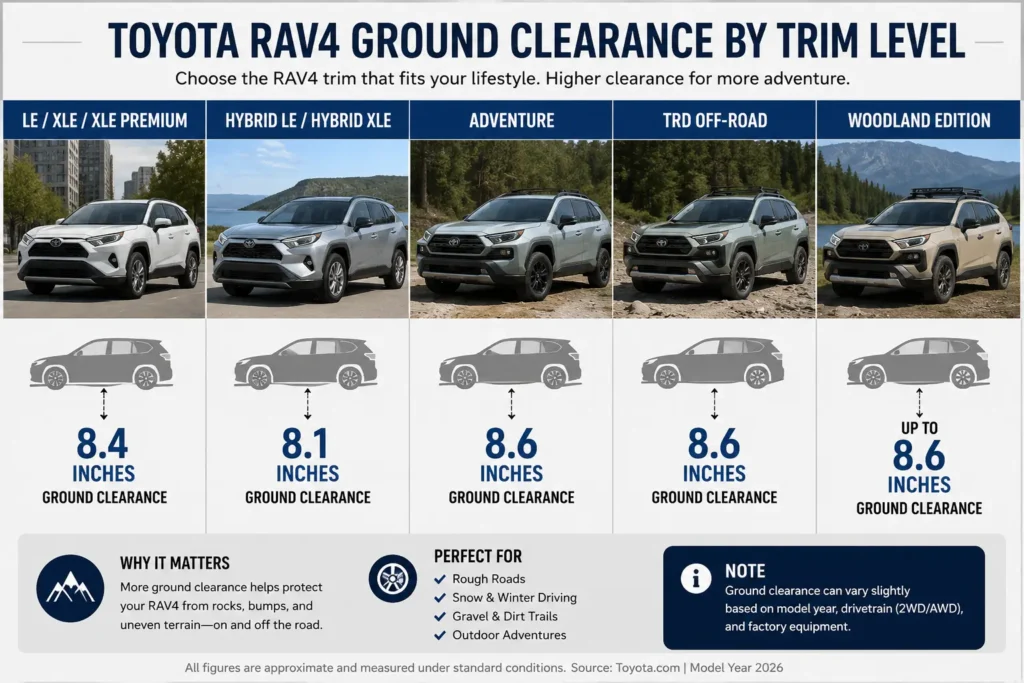
As the table shows, most Toyota RAV4 models offer between 8.0 and 8.6 inches of ground clearance. Adventure, TRD Off-Road, and Woodland Edition models provide the highest clearance, making them better suited for rough roads and outdoor adventures.
Why Ground Clearance Matters in the Toyota RAV4
Many buyers focus on horsepower, fuel economy, or cargo space, but ground clearance can have a major impact on everyday driving. The higher a vehicle sits from the ground, the easier it is to handle obstacles without scraping the underbody.
For Toyota RAV4 owners, adequate ground clearance provides confidence when driving over speed bumps, potholes, gravel roads, and uneven terrain. It also becomes especially useful during winter conditions when snow can accumulate on road surfaces.
A higher ride height can improve visibility and allow the RAV4 to tackle light off-road trails more comfortably. However, extremely high ground clearance isn’t always necessary for daily commuting. Toyota strikes a good balance by providing enough clearance for adventure while maintaining stable on-road handling.
Key benefits of Toyota RAV4 ground clearance include:
- Better protection for the vehicle’s underside
- Easier driving on rough roads and gravel tracks
- Improved capability in snow and muddy conditions
- More confidence on light off-road trails
- Reduced risk of scraping over speed bumps and curbs
Toyota RAV4 vs Competitors: Ground Clearance Comparison
Many SUV shoppers compare the Toyota RAV4 with competitors such as the Honda CR-V, Subaru Forester, and Mazda CX-50. Ground clearance is one of the key specifications that can influence off-road capability, winter driving confidence, and overall practicality.
| Vehicle | Ground Clearance |
| Toyota RAV4 | 8.4–8.6 inches |
| Honda CR-V | 7.8–8.2 inches |
| Subaru Forester | 8.7 inches |
| Mazda CX-50 | 8.3–8.6 inches |
| Hyundai Tucson | 8.3 inches |
| Kia Sportage | 8.3 inches |
The Toyota RAV4 offers more ground clearance than many compact SUVs, including the Honda CR-V. While the Subaru Forester holds a slight advantage, the RAV4 provides an excellent balance of ride height, comfort, fuel efficiency, and everyday usability. For most drivers, its clearance is more than enough for rough roads, snow, and light off-road adventures.
Is the Toyota RAV4 Good for Off-Road Driving?
While the Toyota RAV4 is not a hardcore off-road SUV like a Jeep Wrangler or Toyota 4Runner, it performs surprisingly well on dirt roads, forest trails, gravel paths, and snowy terrain.
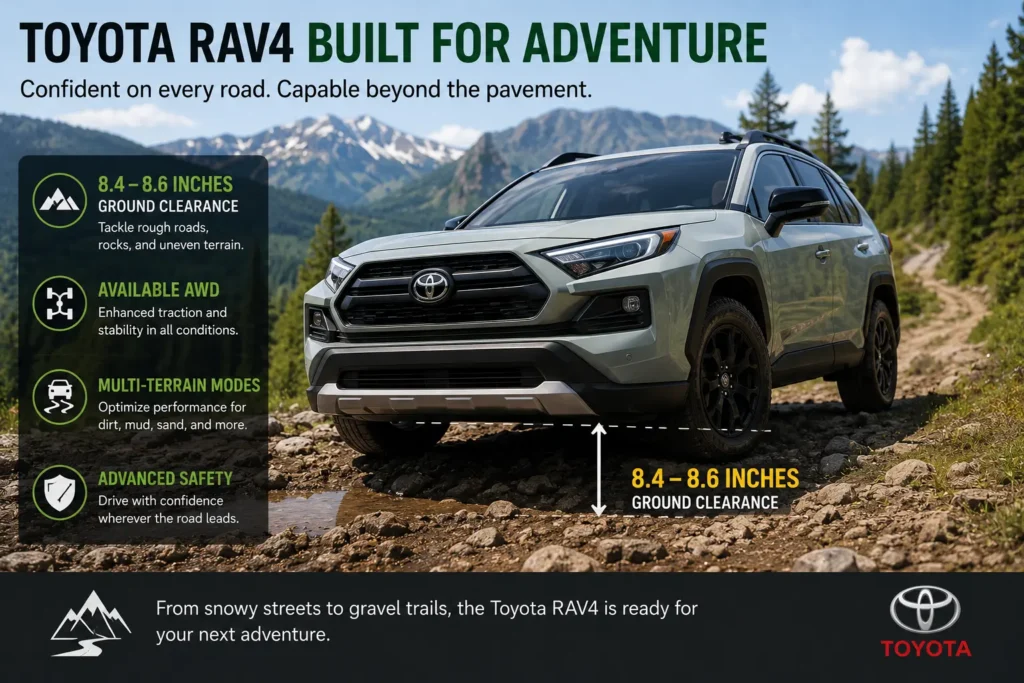
The combination of generous ground clearance, available all-wheel drive (AWD), and advanced traction control systems gives the RAV4 enough capability for most outdoor adventures. Drivers who frequently visit campsites, hiking trails, or mountain roads will find that the RAV4 handles these environments with confidence.
For the best off-road performance, trims such as the Adventure, TRD Off-Road, and Woodland Edition are the most capable options. These models offer additional features designed to improve traction and stability on uneven surfaces.
That said, the RAV4 is best described as an adventure-ready crossover rather than a dedicated off-road vehicle. It excels in situations that most drivers actually encounter, including gravel roads, muddy tracks, snow-covered streets, and light trails.
Factors That Affect Ground Clearance
Although the published ground clearance figures remain relatively consistent, several factors can affect the real-world clearance of a Toyota RAV4.
Tire Size
Larger tires can slightly increase ride height, while smaller tires may reduce the distance between the vehicle and the ground.
Vehicle Load
Carrying passengers, luggage, or heavy cargo can compress the suspension and slightly reduce effective ground clearance.
Suspension Condition
Worn suspension components may lower the vehicle over time, affecting both ride quality and clearance.
Aftermarket Modifications
Lift kits and suspension upgrades can increase ground clearance, while lowering kits have the opposite effect.
Conclusion
The Toyota RAV4 Ground Clearance is one of the reasons this SUV remains a popular choice among drivers who want a balance of comfort, practicality, and adventure capability. With most models offering between 8.0 and 8.6 inches of clearance, the Toyota RAV4 Ground Clearance is well suited for everyday commuting, rough roads, winter driving, and light off-road travel.
Whether you choose a standard model or an off-road-focused trim, the Toyota RAV4 Ground Clearance provides enough height to confidently handle obstacles while maintaining a comfortable ride. For most drivers, the Toyota RAV4 Ground Clearance delivers an excellent combination of capability and real-world usability.
Before choosing a trim, it’s worth comparing the Toyota RAV4 Ground Clearance across different models to ensure it matches your driving needs. Whether you’re commuting in the city, traveling on rough roads, or exploring light off-road trails, the Toyota RAV4 Ground Clearance provides the versatility most drivers need. Thanks to its balanced ride height and practical design, the Toyota RAV4 Ground Clearance remains one of the strongest advantages of this popular compact SUV.
For most buyers, the Toyota RAV4 Ground Clearance delivers an excellent combination of capability and real-world usability, making the Toyota RAV4 Ground Clearance a key reason why this SUV remains a top choice in its segment.
Frequently Asked Questions
What is the ground clearance of the Toyota RAV4?
Most Toyota RAV4 models offer between 8.0 and 8.6 inches of ground clearance, depending on the trim level and model year.
Which RAV4 trim has the highest ground clearance?
The Adventure, TRD Off-Road, and Woodland Edition trims typically provide the highest ground clearance at around 8.6 inches.
Is the Toyota RAV4 good for snow?
Yes. The Toyota RAV4 performs well in snowy conditions thanks to its ground clearance, available AWD system, and advanced traction control features.
Is the RAV4 higher than the Honda CR-V?
In most configurations, the Toyota RAV4 offers slightly more ground clearance than the Honda CR-V, making it better suited for rough roads and light off-road driving.
Can I increase the ground clearance of my Toyota RAV4?
Yes. Ground clearance can be increased through larger tires, suspension upgrades, or lift kits. However, modifications may affect ride quality and handling.
Is 8.4 inches of ground clearance enough for off-road driving?
For light off-road trails, gravel roads, camping trips, and snow-covered routes, 8.4 inches is generally more than sufficient. Serious rock crawling would require a more specialized off-road vehicle.