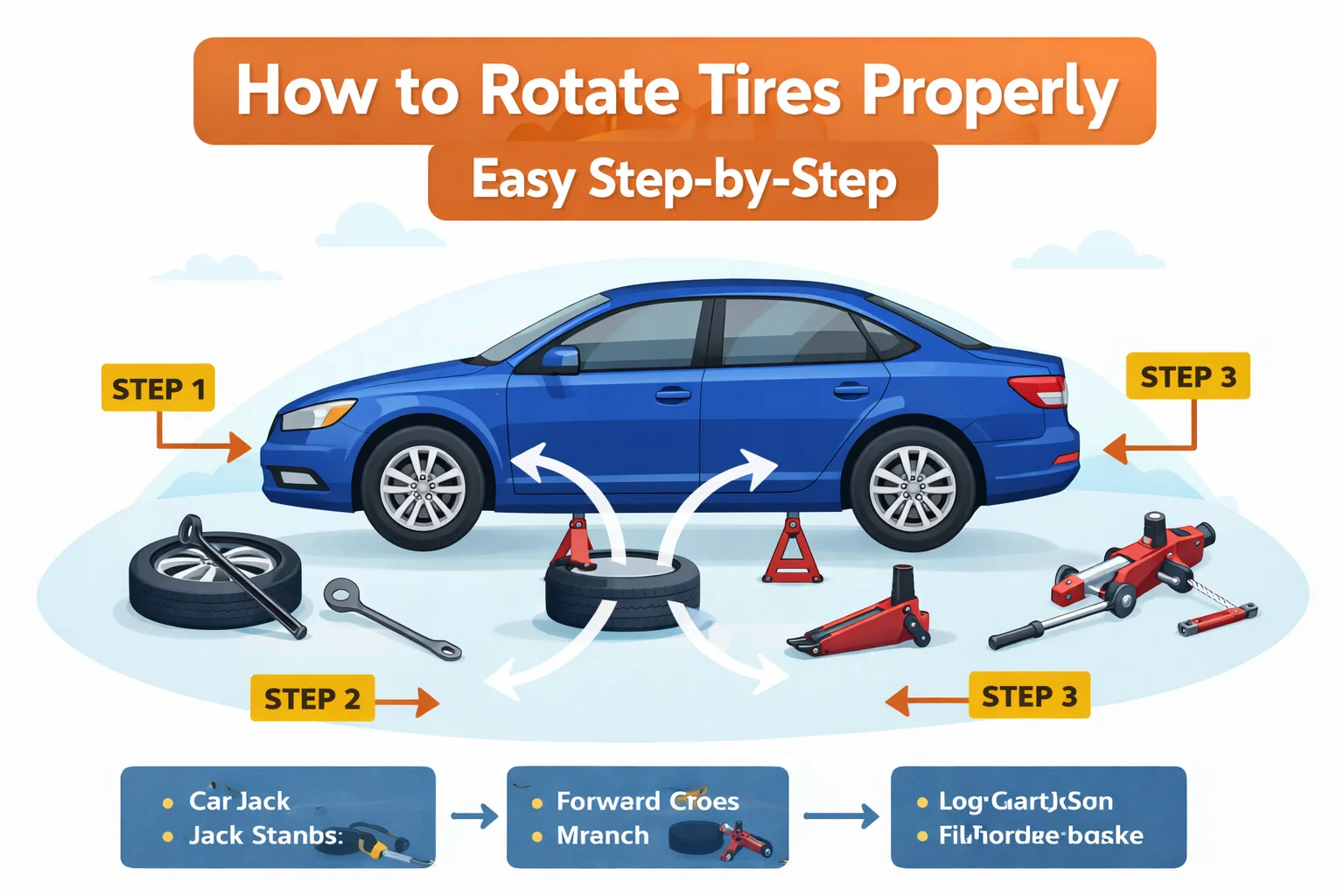
Rotating your tires is one of the easiest ways to extend tire life and improve vehicle performance. If you want to learn how to rotate tires properly, this step-by-step guide will help you do it safely and correctly even if you’re a beginner. Proper tire rotation ensures even wear, better handling, and improved fuel efficiency. In this guide, you’ll learn the correct tire rotation patterns, tools needed, and expert tips to keep your tires in top condition.
In addition, regular tire rotation helps maintain balanced traction on all four wheels, which is especially important for safe driving in different road conditions. Whether you drive daily or occasionally, learning how to rotate tires properly can save money and prevent uneven tire damage.
Why Tire Rotation is Important
Tire rotation is essential for maintaining even tire wear and extending the lifespan of your tires. Uneven wear can affect your vehicle’s performance, safety, and fuel efficiency.
Here are some key benefits of regular tire rotation:
- Extends tire life
- Improves fuel efficiency
- Enhances driving safety
- Ensures even tread wear
Regular tire rotation helps your vehicle perform better and keeps you safe on the road.
How Tire Rotation Affects Performance
Tire rotation plays a crucial role in overall vehicle performance. When tires wear evenly, your car drives smoother and handles better on the road.
Uneven tire wear can lead to poor steering control, reduced braking efficiency, and increased fuel consumption. By rotating your tires regularly, you ensure balanced traction and better road grip.
This not only improves safety but also enhances driving comfort and extends the life of your tires.
| Drive Type | Rotation Pattern | Description |
|---|---|---|
| Front-Wheel Drive (FWD) | Forward Cross | Front tires go to rear, rear tires move diagonally to front |
| Rear-Wheel Drive (RWD) | Rearward Cross | Rear tires go to front, front tires move diagonally to back |
| All-Wheel Drive (AWD) | Cross Pattern | All tires rotate in a cross pattern for even wear |
Tire Rotation vs Wheel Alignment
Many people confuse tire rotation with wheel alignment, but both are different maintenance processes.
- Tire Rotation: Changing the position of tires to ensure even wear
- Wheel Alignment: Adjusting the angles of wheels for proper balance
Both are important for vehicle performance, and they should be done regularly for the best results.
Best Tools to Rotate Tires Properly
Using high-quality tools can make tire rotation easier and safer. A hydraulic jack and torque wrench are highly recommended for better control and accuracy.
Investing in proper tools not only saves time but also ensures that your tires are installed correctly without damage.
Using the right tools is important if you want to learn how to rotate tires properly and safely at home.
Different Tire Rotation Patterns (DETAIL)
Understanding the correct tire rotation pattern is very important to ensure even tire wear. Different vehicles require different patterns based on their drivetrain.
Understanding these patterns is essential if you want to rotate tires properly for maximum tire life.
Front-Wheel Drive (FWD)
In FWD vehicles, the front tires wear faster. Move the front tires to the rear and cross the rear tires to the front.
Rear-Wheel Drive (RWD)
In RWD vehicles, rear tires wear faster. Move rear tires to the front and cross the front tires to the back.
All-Wheel Drive (AWD)
AWD vehicles require a consistent rotation pattern, usually a cross pattern. Always follow your vehicle manual.
Benefits of Regular Tire Rotation (EXPAND)
Benefits of Regular Tire Rotation
- Extends the lifespan of your tires
- Improves fuel efficiency
- Enhances driving comfort
- Reduces uneven wear
- Improves road safety
| Tool | Purpose | Importance Level |
|---|---|---|
| Car Jack | Lifts the vehicle off the ground | Essential |
| Jack Stands | Provides safety support after lifting | Very Important |
| Lug Wrench | Loosens and tightens lug nuts | Essential |
| Torque Wrench | Ensures proper tightening of lug nuts | Recommended |
| Gloves | Protects hands during work | Optional |
When Not to Rotate Tires
There are some situations where tire rotation may not be recommended:
If your vehicle uses directional tires
If tires have uneven damage
If different tire sizes are used
If tires are worn out
Cost of Tire Rotation
The cost of tire rotation is usually affordable. On average, it can range between $20 to $50 depending on the service provider. Some service centers offer free tire rotation with maintenance packages.
Step-by-Step Guide to Rotate Tires
Follow these simple steps to rotate your tires properly and safely:
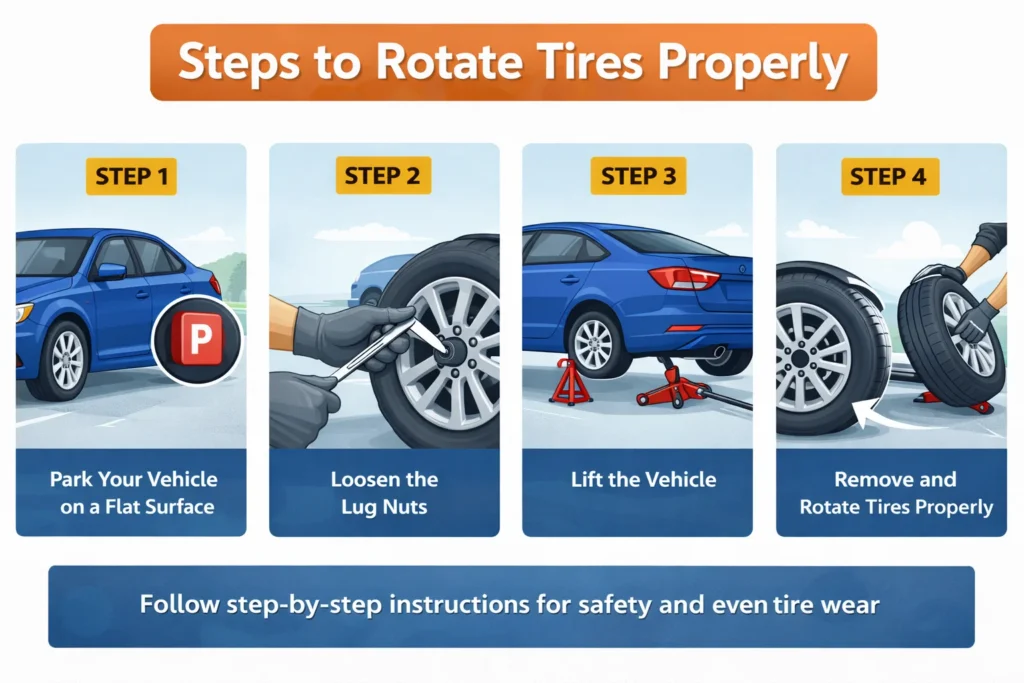
Step 1 – Park Your Vehicle on a Flat Surface
Make sure your car is parked on a flat and stable surface. Engage the parking brake to prevent movement.
Step 2 – Loosen the Lug Nuts
Before lifting the car, slightly loosen the lug nuts using a lug wrench. Do not remove them completely yet.
Step 3 – Lift the Vehicle
Use a car jack to lift the vehicle and place jack stands under it for safety.
Step 4 – Remove and Rotate Tires Properly
Remove the tires and rotate them according to your vehicle’s recommended pattern (FWD, RWD, or AWD).
Step 5 – Tighten Lug Nuts and Lower the Vehicle
Reinstall the tires, tighten the lug nuts properly, and lower the vehicle back to the ground.
How Often Should You Rotate Tires Properly
It is recommended to rotate your tires every 5,000 to 7,500 miles or as suggested in your vehicle manual. Regular rotation helps maintain even wear and extends tire life.
Knowing how to rotate tires properly and regularly helps maintain balanced performance and safety.
| Driving Condition | Recommended Rotation Interval |
|---|---|
| Normal Driving | Every 5,000 – 7,500 miles |
| Highway Driving | Every 6,000 – 8,000 miles |
| Off-Road Driving | Every 3,000 – 5,000 miles |
| Heavy Loads / Towing | Every 4,000 – 6,000 miles |
Signs You Need Tire Rotation Immediately
- Uneven tire wear
- Vehicle pulling to one side
- Vibration while driving
- Reduced fuel efficiency
Pro Tips for Tire Maintenance
- Check tire pressure regularly
- Rotate tires every few months
- Inspect tread depth
- Balance and align tires when needed
Common Mistakes to Avoid
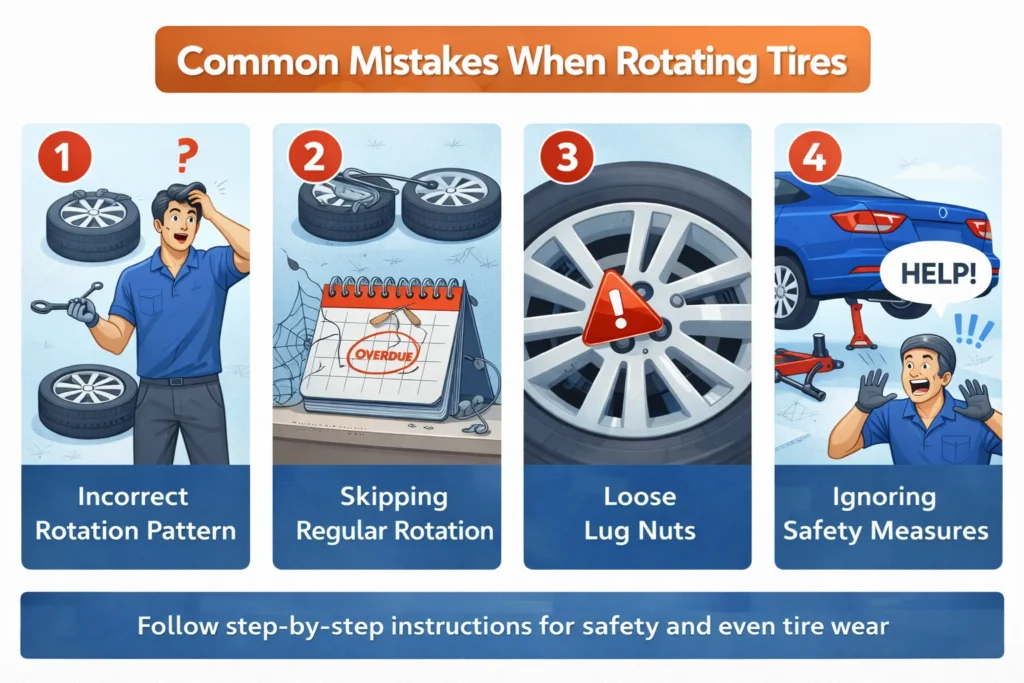
Avoiding these mistakes will help you rotate tires properly and safely:
- Not following the correct tire rotation pattern
- Skipping regular tire rotation
- Not tightening lug nuts properly
- Ignoring safety measures while lifting the vehicle
These mistakes can reduce tire life and affect your vehicle’s performance.
Conclusion
Learning how to rotate tires properly is essential for maintaining your vehicle’s performance and safety. By following the correct steps and rotation patterns, you can extend tire life, improve fuel efficiency, and enjoy a smoother driving experience.
Make tire rotation a regular part of your car maintenance routine to avoid costly repairs and ensure safe driving. By following this guide on how to rotate tires properly, you can improve your car’s performance and extend tire life.
FAQs
How often should I rotate tires?
It is recommended to rotate your tires every 5,000 to 7,500 miles or as per your vehicle manual.
Can I rotate tires at home?
Yes, you can rotate tires at home using basic tools like a jack and lug wrench.
Does tire rotation improve fuel efficiency?
Yes, proper tire rotation ensures even wear, which improves fuel efficiency and performance.
How to rotate tires properly at home?
You can rotate tires properly at home by using a car jack, loosening lug nuts, and following the correct rotation pattern for your vehicle type. Always ensure safety and use proper tools.