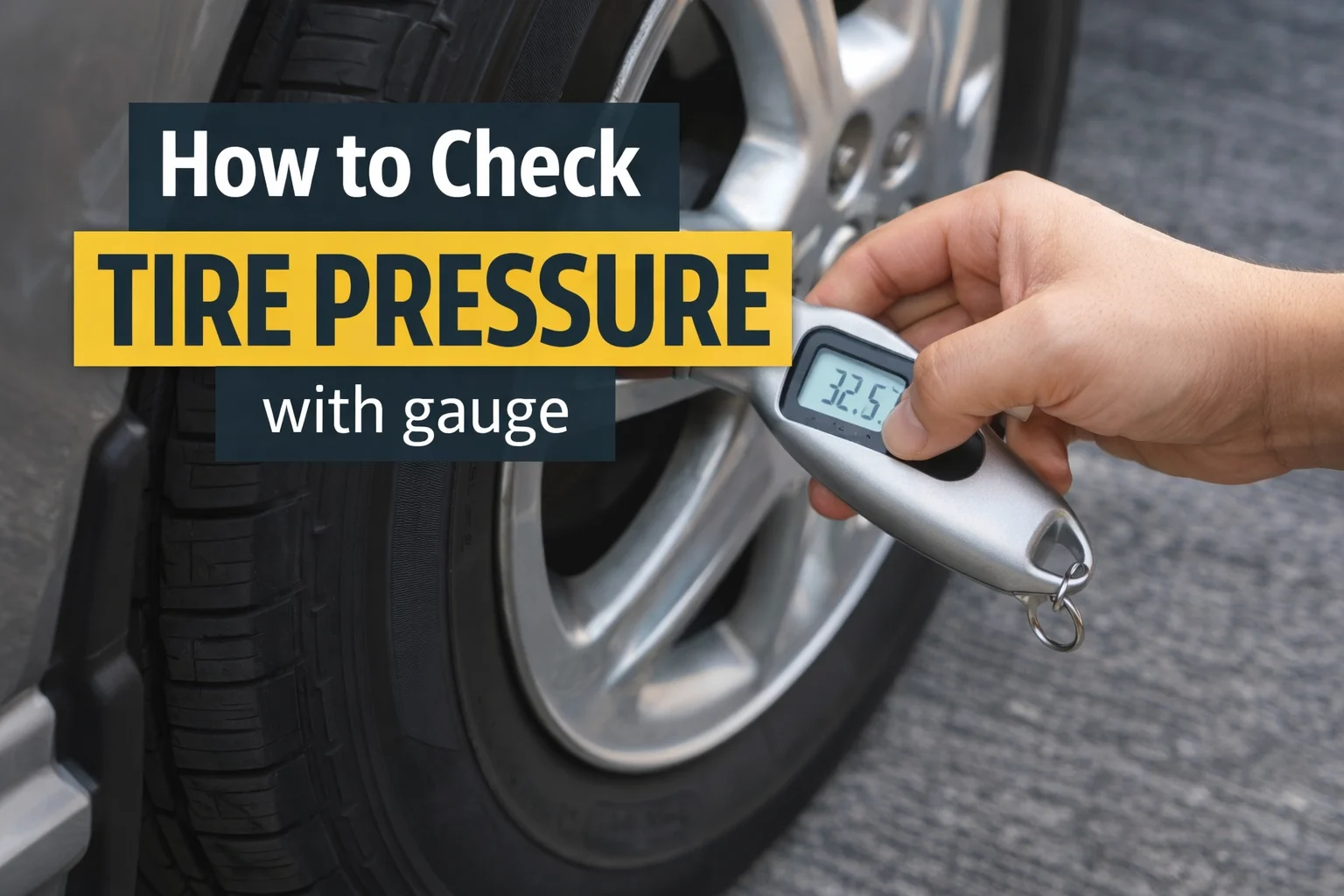
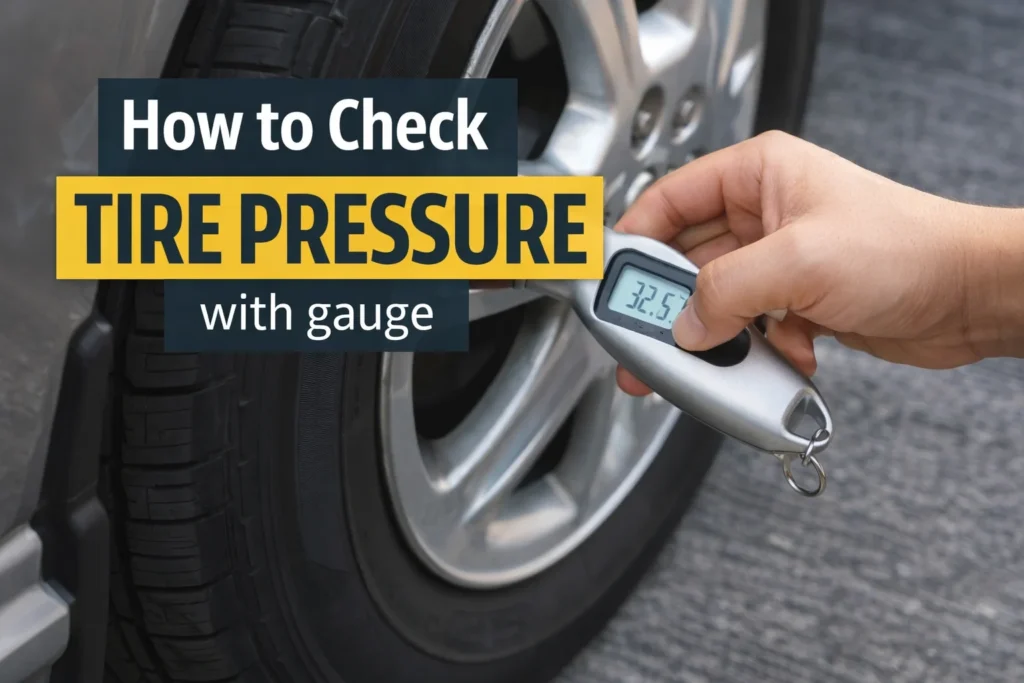
Checking your tire pressure is one of the easiest ways to keep your car safe, improve fuel efficiency, and extend tire life. If you want to learn how to check tire pressure properly, this simple guide will walk you through the process step by step even if you’re a beginner. To check tire pressure, place a pressure gauge on the valve stem, read the PSI, and adjust it according to the manufacturer’s recommended level. You can easily check tire pressure at home, and the entire process takes only 1–2 minutes.
If you want to learn how to check tire pressure properly, this simple guide will walk you through the process step by step—even if you’re a beginner.
Why Tire Pressure is Important
Maintaining the correct tire pressure is essential for both safety and performance. Properly inflated tires help improve fuel efficiency, ensure better road grip, and extend the lifespan of your tires.
Here are some key benefits of maintaining correct tire pressure:
- Improves fuel efficiency
- Prevents uneven tire wear
- Enhances vehicle handling
- Reduces the risk of accidents
Driving with underinflated or overinflated tires can lead to serious safety risks, reduced fuel efficiency, and faster tire wear.
This is why it’s important to understand how to check tire pressure regularly for better performance and safety.
Tools You Need to Check Tire Pressure
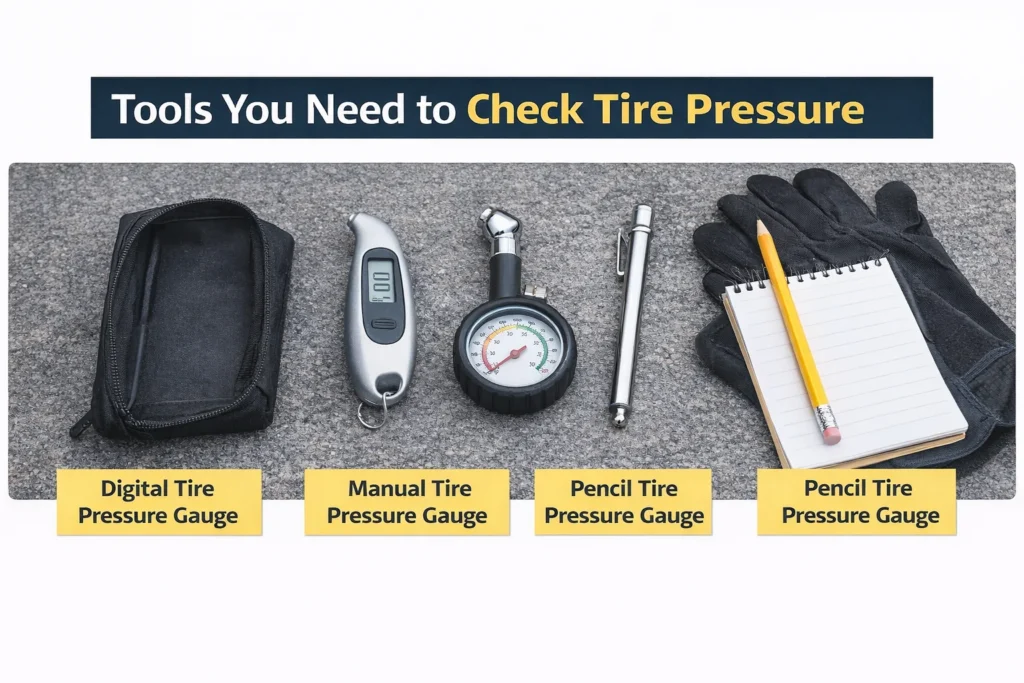
To check tire pressure accurately, you need a few basic tools. These tools help you measure and adjust the air pressure in your tires quickly and efficiently.
| Tool Name | Purpose |
| Tire Pressure Gauge | Measures air pressure in tires |
| Air Compressor | Adds air if pressure is low |
| Vehicle Manual | Shows recommended PSI |
A digital tire pressure gauge is recommended for more accurate readings and easier use, especially for beginners.
Recommended Tire Pressure (PSI)
The recommended tire pressure varies depending on your vehicle type. You can usually find the correct PSI in your vehicle manual or on the driver’s side door sticker.
| Vehicle Type | Recommended PSI |
| Small Cars | 30–35 PSI |
| SUVs | 35–40 PSI |
| Trucks | 40–50 PSI |
Always follow your vehicle manufacturer’s recommended PSI for optimal performance, safety, and tire lifespan.
Step-by-Step Guide on How to Check Tire Pressure
Follow these simple steps to check your tire pressure correctly and maintain optimal performance and safety.
Step 1 – Check When Tires Are Cold
Always check tire pressure when the tires are cold, preferably in the morning or after the car has been parked for a few hours. Driving heats up the tires and can give inaccurate readings.
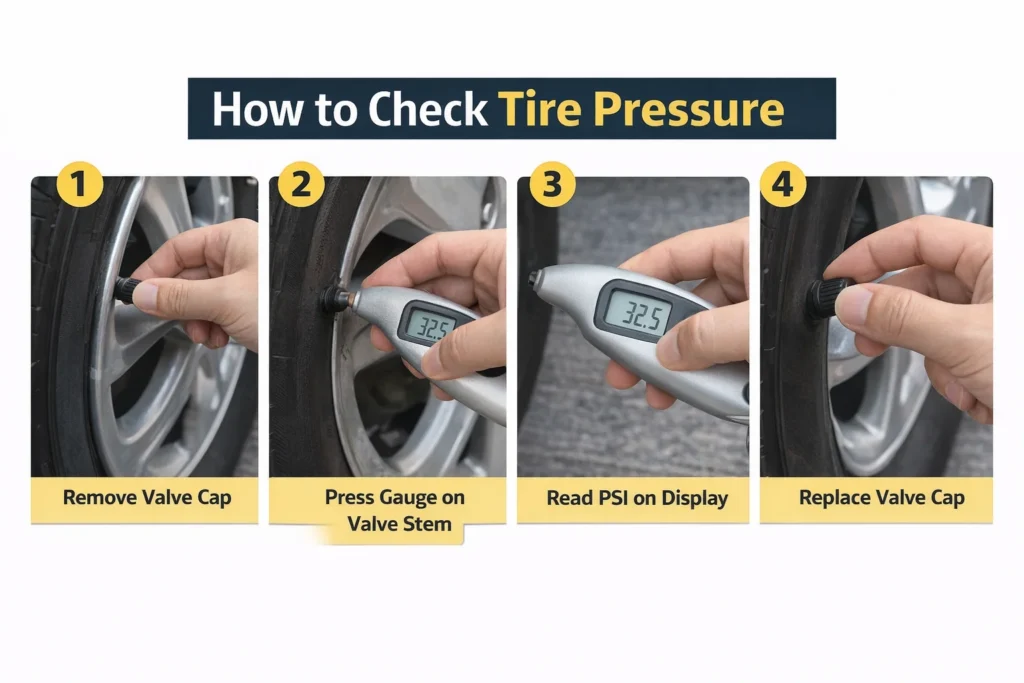
Step 2 – Remove Valve Cap
Unscrew the valve cap from the tire and keep it in a safe place so it doesn’t get lost.
Step 3 – Use Tire Pressure Gauge
Place the tire pressure gauge firmly onto the valve stem and press it down. You will see the PSI reading instantly on the gauge. Make sure the gauge is properly aligned to avoid air leakage and get an accurate reading.
Step 4 – Compare with Recommended PSI
Compare the reading with your vehicle’s recommended PSI. If the pressure is too low, add air using an air compressor. If it is too high, release some air.
Step 5 – Replace Valve Cap
Once done, screw the valve cap back onto the tire securely to prevent dust and debris from entering.
Signs Your Tire Pressure is Wrong
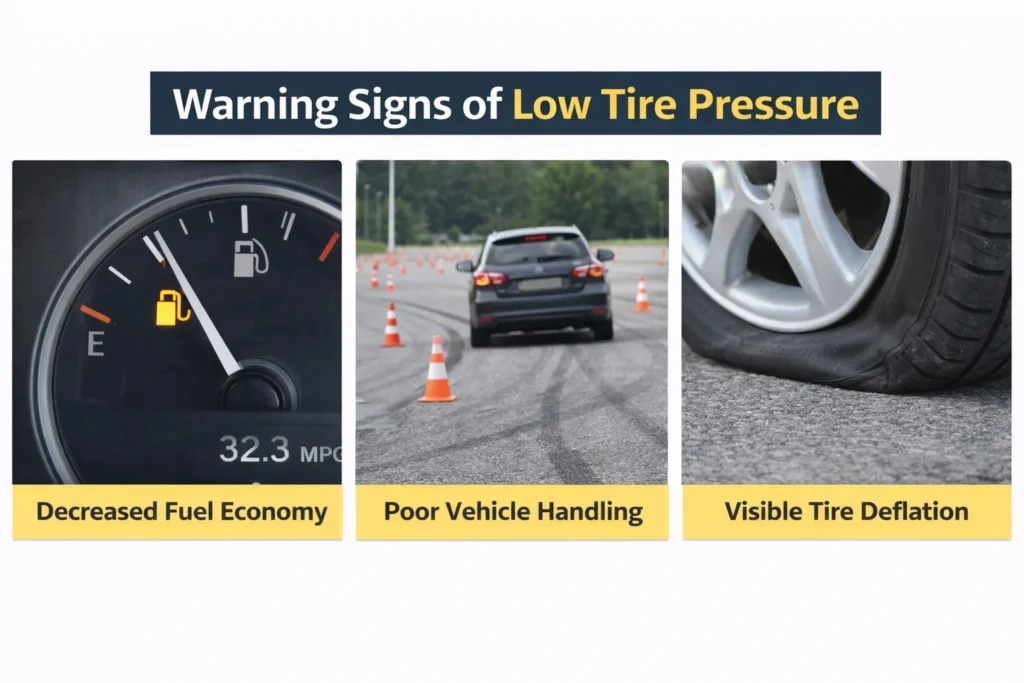
Incorrect tire pressure can cause several noticeable issues while driving. Here are some common signs that your tire pressure may be too low or too high:
- The car pulls to one side
- Uneven tire wear
- Reduced fuel efficiency
- A warning light on the dashboard
- Poor handling or steering response
Pro Tips for Better Tire Maintenance
Maintaining proper tire pressure is just one part of tire care. Here are some expert tips to keep your tires in the best condition:
- Check tire pressure every 2–4 weeks
- Always check before long trips
- Don’t forget to check the spare tire
- Use a digital gauge for better accuracy
- Rotate your tires regularly for even wear
- Learning how to check tire pressure properly can save you from costly tire damage and improve fuel efficiency.
Common Mistakes to Avoid
Avoiding common mistakes can help you maintain correct tire pressure and extend tire life:
- Checking tire pressure when tires are hot
- Ignoring the manufacturer’s recommended PSI
- Not checking tire pressure regularly
- Overinflating tires
- Forgetting to replace the valve cap
Digital vs Analog Tire Pressure Gauge
Choosing the right tire pressure gauge can make a big difference in accuracy and ease of use.
| Feature | Digital Gauge | Analog Gauge |
| Accuracy | High | Medium |
| Ease of Use | Very Easy | Manual |
| Price | Slightly Expensive | Affordable |
| Display | Digital Screen | Dial Meter |
A digital tire pressure gauge is highly recommended for beginners because it provides more accurate readings and is easier to use.
Best Time to Check Tire Pressure
The best time to check tire pressure is when the tires are cold, usually in the morning before driving.
- In winter, tire pressure decreases due to cold temperatures
- In summer, tire pressure increases due to heat
Temperature changes directly affect tire pressure, so regular checks are important.
Knowing how to check tire pressure at the right time ensures you get accurate PSI readings.
What is TPMS (Tire Pressure Monitoring System)?
TPMS (Tire Pressure Monitoring System) is a built-in safety feature in modern vehicles that alerts you when tire pressure is too low. If you see a warning light on your dashboard, it means one or more tires need immediate attention. However, manual checking is still recommended for accurate results.
Conclusion
Checking tire pressure is a simple but essential part of car maintenance that directly impacts your safety, fuel efficiency, and tire lifespan. By regularly maintaining the correct tire pressure, you can avoid common issues like uneven wear, poor handling, and increased fuel consumption.
Make it a habit to check your tire pressure every few weeks, especially before long trips, to ensure a safer and smoother driving experience.
By learning how to check tire pressure properly, you can improve your car’s safety and performance.
How often should I check tire pressure?
You should check tire pressure at least once every two to four weeks.
What is the ideal tire pressure?
Most cars require between 30–35 PSI, but always check your vehicle manual.
Can I check tire pressure at home?
Yes, you can easily check tire pressure at home using a tire pressure gauge
Does temperature affect tire pressure?
Yes, cold weather lowers pressure while hot weather increases it.
Is low tire pressure dangerous?
Yes, it can reduce vehicle control, damage tires, and increase accident risk.
How do I know how to check tire pressure correctly?
You can learn how to check tire pressure by using a gauge and following a simple step-by-step process.